
Winter brings familiar faces back to the feeder: the cardinal at dawn, a busy chickadee, a nuthatch moving headfirst down a trunk. A short, repeatable bird count turns these quick encounters into a satisfying birding habit. You do not need a rare species, fancy equipment, or hours of free time—just a consistent place to watch and a note of what you see.
Keep the everyday count simple
This is a personal 10-minute ritual, not a formal survey. Choose one spot you can revisit comfortably, such as a window overlooking a feeder, water source, or shrub border. Bring a notebook, your phone, or a simple checklist. The aim is attention: learn your regular birds, notice changes, and enjoy the season.
Your 10-minute winter bird count
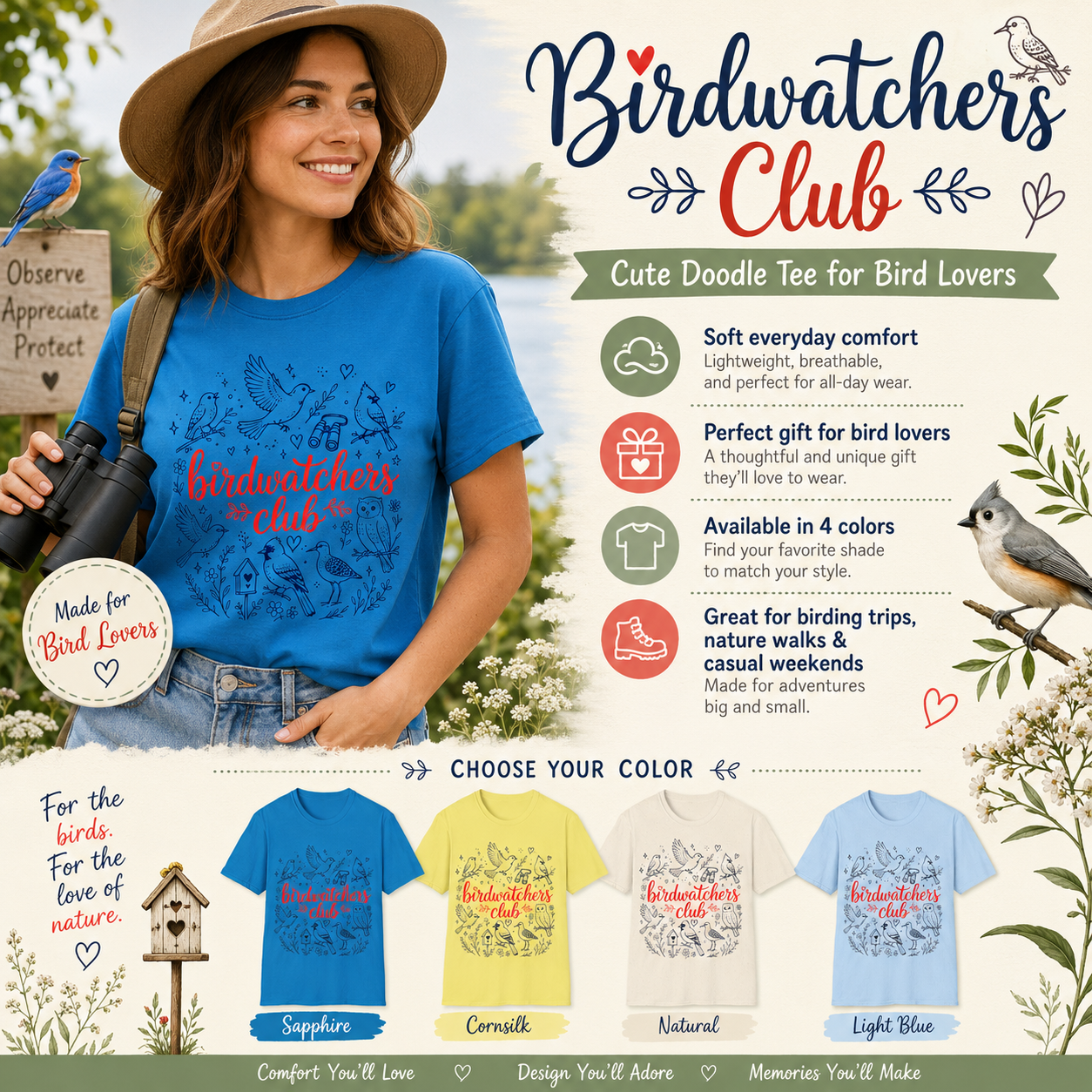
Love Birds? Shop Our Etsy Store!
Faith-filled bird shirts, mugs & gifts — beautifully printed & shipped fast. 122+ designs, 5-star rated.
🛒 Shop YourBirdBuddyShop on Etsy| Minute | What to do |
|---|---|
| 0–1 | Write the date, time, weather impression, and the exact area you are watching. |
| 1–7 | List every species you confidently identify and make a small note about food, perch, or behavior. |
| 7–9 | Recheck the quiet edges: ground beneath feeders, shrubs, tree trunks, and water. |
| 9–10 | Circle one question for next time: “Was that a female House Finch?” or “Which feeder did the nuthatch prefer?” |
1. Return to the same view each time
Consistency helps you notice real changes. Project FeederWatch similarly recommends selecting a site you can observe consistently and defining clear boundaries. [1] For a personal count, your “site” can be a feeder, birdbath, and the nearby cover you can see from one chair.
2. Count what is visible, not every arrival
For a casual journal, jot a rough number if you like, but do not try to add every bird that comes and goes. A useful habit is to record the largest group you see together—“four juncos under the feeder,” for example. That mirrors the core Project FeederWatch principle of recording the maximum number of a species visible simultaneously, rather than a cumulative total. [2]
3. Use field marks before an app
When an unfamiliar bird appears, take a photo if you can and write what you actually notice: size, beak shape, stripes, wing bars, tail pattern, behavior, and where it was feeding. Then consult a field guide or identification resource. FeederWatch encourages observers to study the bird’s field marks before looking for an identification. [1]
4. Record behavior, not just names
One simple behavior note makes your list more memorable. Was a woodpecker using suet? Were juncos feeding beneath a platform? Did a cardinal wait in cover before approaching? Over several weeks, these small notes reveal the rhythms of your yard.
5. Include “nothing new” days
A quiet count still teaches you something. Project FeederWatch emphasizes that common birds, small numbers, and even counts with no birds are useful observations. [3] In a personal journal, a quiet day can prompt a practical check: has snow covered natural food, is the feeder empty, or is the morning simply calm?
6. Turn the habit into citizen science only when you are ready
If you want to submit observations, follow the program’s actual protocol rather than treating your 10-minute note as an official count. Project FeederWatch uses two consecutive count days from November through April and has its own tally method. [3] The annual Great Backyard Bird Count offers another approachable opportunity: its participation guide asks people to watch for at least 15 minutes during the event window and submit observations through supported tools. [4]
A notebook page worth repeating
Use five short lines: date and time; weather; species; largest group visible; and one behavior or question. By the end of winter, you will have your own field guide to the birds outside your window—and a reliable ritual that makes even an ordinary morning feel more observant.
References
- Project FeederWatch: Detailed Instructions
- Project FeederWatch: Count Your Birds and Mammals
- Project FeederWatch: How to Participate
- Great Backyard Bird Count: How to Participate
Enjoyed this post? Browse our Etsy shop!
Bird shirts, mugs & faith apparel · 122+ designs · ★★★★★ 5.0


0 Comments