
Every year, over 50 million people in the United States feed birds in their yards. They often find themselves dealing with larger or aggressive birds that push out smaller species. This guide will help you figure out which birds to keep away from your feeders.
Watching colorful birds together can be delightful. But, some birds might crowd out others and even attract predators like hawks. We’ll show you how to make your bird feeding area safer for your favorite birds.
Key Takeaways
- Large or aggressive species can spoil backyard feeding.
- Different birds prefer specific feeder styles.
- Clean feeding spots deter unwelcome visitors.
- Predators like hawks seek easy targets.
- Thoughtful strategies encourage harmony among all birds.
- Knowing what birds to keep from your backyard feeders saves time and trouble.
Understanding Backyard Bird Dynamics
Birds often share the same spaces but react differently to threats. Ground-feeding birds are more at risk from hawks. They hide in thick shrubs for safety. A well-planned yard can be both safe and lively for bird lovers.
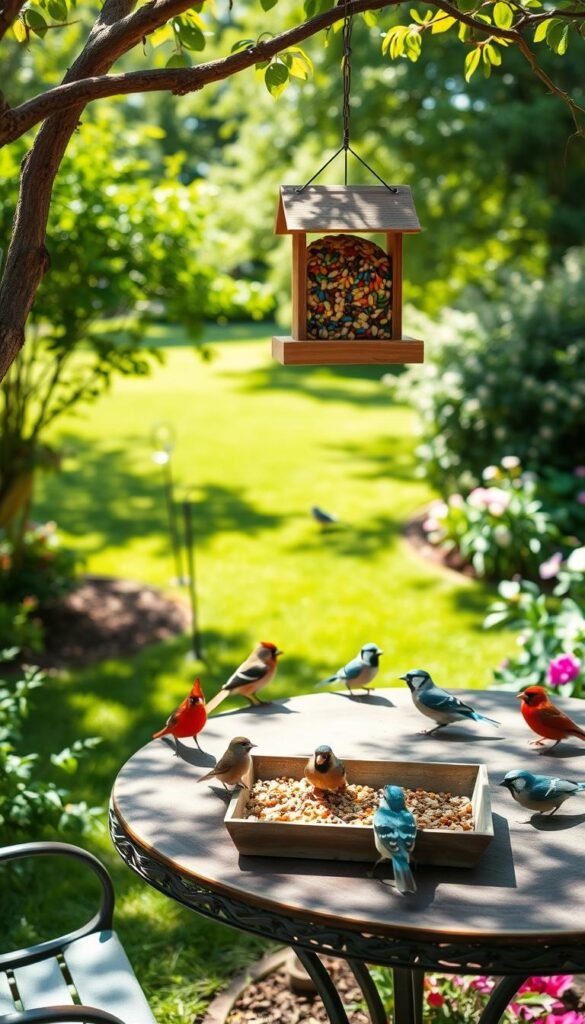 cardinals, blue jays, and chickadees are perched around the feeders, creating a lively atmosphere. Sunlight filters through the trees, casting dappled shadows and enhancing the vibrant colors of the birds and plants. The background features a gently blurred lawn and flowering plants, creating a peaceful and inviting environment. Capture this scene from a low angle to emphasize the activity at the feeders, conveying a sense of harmony in nature." title="A serene backyard scene showcasing a variety of bird feeders designed to attract specific species, surrounded by lush greenery. In the foreground, a wooden bird feeder hangs from a sturdy branch, filled with colorful bird seeds, while a small tray feeder rests on a rustic garden table. In the middle ground, various birds such as cardinals, blue jays, and chickadees are perched around the feeders, creating a lively atmosphere. Sunlight filters through the trees, casting dappled shadows and enhancing the vibrant colors of the birds and plants. The background features a gently blurred lawn and flowering plants, creating a peaceful and inviting environment. Capture this scene from a low angle to emphasize the activity at the feeders, conveying a sense of harmony in nature." width="585" height="1024" class="aligncenter size-large wp-image-2238" srcset="https://yourbirdbuddy.com/wp-content/uploads/2025/12/A-serene-backyard-scene-showcasing-a-variety-of-bird-feeders-designed-to-attract-specific-585x1024.jpeg 585w, https://yourbirdbuddy.com/wp-content/uploads/2025/12/A-serene-backyard-scene-showcasing-a-variety-of-bird-feeders-designed-to-attract-specific-171x300.jpeg 171w, https://yourbirdbuddy.com/wp-content/uploads/2025/12/A-serene-backyard-scene-showcasing-a-variety-of-bird-feeders-designed-to-attract-specific.jpeg 768w" sizes="(max-width: 585px) 100vw, 585px" />
How Different Species Interact
Some birds gather near food sources, while others have their own spots. This creates a hierarchy, with smaller birds needing quick escapes. Adding plants or greenery gives them safe places to hide.
The Role of Food Sources and Habitat for Birdwatching
Using bird feeder tips can help place feeders safely away from windows. This cuts down on bird collisions and keeps shy birds calm. Strategic placement makes birdwatching more enjoyable and balanced.
Benefits of a Balanced Bird Population
A mix of songbirds, finches, and other birds brings ecological balance. Predators keep pest populations in check, while seed-eating birds help plants grow. Following bird feeder tips makes your backyard a healthier, more vibrant place.
What Birds to Keep From Your Backyard Feeders
Large groups of grackles or starlings can take over a feeder. They push out calmer birds. Starlings might harm smaller birds, while grackles come in fast.
Raptors like hawks can show up if birds gather. They scare away doves and other peaceful birds.
Identifying Problematic Species
The Cornell Lab of Ornithology says some birds are too aggressive. Grackles and starlings often take over. They eat more seeds, leaving less for cardinals or finches.
Hawks can make feeding stations unsafe. Their sudden arrival scares birds away.

Bird Feeder Tips to Minimize Conflicts: A Backyard Birding Guide
Limiting ground feeding helps protect birds. Doves stay low, so hiding them under shrubs helps. This makes hawks less likely to attack.
Rotating feeder schedules can also help. Some people stop feeding if hawks come too often. Using feeders for smaller beaks keeps out big birds.
This guide suggests watching bird visits closely. Make changes as needed for a peaceful feeding area.
Why Some Birds Can Become a Nuisance
Some bird species can upset the peace in backyards. Hawks, for example, hang around feeders looking for an easy snack. This can push out songbirds, which are loved by many.
Starlings and pigeons can also be a problem. They crowd feeders, leaving little for other birds. This can make a backyard less enjoyable for bird lovers.
Easy food sources attract hawks and invasive birds. These birds take over, pushing out native species. Protective measures like covered feeders or dense shrubs can help.

Birdwatching advice suggests making small changes. Moving feeders away from hawks can help. Having multiple feeding stations can also keep certain birds away.
These steps help keep the balance of nature in your backyard. They ensure a peaceful environment for birdwatchers.
Evaluating Different Bird Feeder Types
Choosing the right feeder is key to attracting birds. Open platforms welcome many species but can be risky for small birds. Covered feeders, on the other hand, offer better protection from predators.

Feeder materials like metal or high-grade plastic are durable. They keep seed clean, reducing the risk of mold and bacteria. Selecting the right feeder can greatly enhance your bird-watching experience.
Platform Feeders vs. Tube Feeders
Platform feeders offer a wide space for birds to eat. But, they can be taken over by larger birds. Tube feeders, with their smaller perches, keep out bigger birds and let smaller ones eat safely.
Choosing Feeder Materials for Durability
Opt for durable materials to withstand harsh weather. This is essential for a safe bird-watching area. Metal or thick plastic feeders resist wind and rain, keeping the food clean. Place your feeder near bushes or trees for extra protection, encouraging more birds to visit.
Strategies for Deterring Unwanted Visitors
Backyard lovers often look for ways to keep birds away without harming nature. Using physical barriers is a good start. Wire fencing around feeders lets small birds in but keeps larger ones out. Also, cleaning up spilled seeds on the ground stops ground-foraging pests.
Putting feeders near covered spots adds extra safety. A gazebo roof or a shelter overhead makes it hard for predators to spot their prey. Taking feeders down for a few days can also scare off raptors that count on easy meals. These steps help keep your feeders bird-friendly and your backyard safe.

- Install wire cages or mesh around feeder openings.
- Relocate tilted or open trays to reduce litter.
- Limit spilled seeds under feeders.
- Keep feeding stations under partial cover.
- Watch for repeated predator visits and remove feeders temporarily.
| Strategy | Benefit |
|---|---|
| Wire Fencing | Small birds can feed, large ones discouraged |
| Clean Ground Area | Minimizes pests and unintended visitors |
| Temporary Feeder Removal | Disrupts predator patterns |
Choosing the Right Birdseed for Preferred Species
Quality seed is key to attracting the right birds to your feeder. A mix that favors smaller or friendlier birds can create a lively scene. Fresh water nearby keeps these birds healthy.
Choosing clean seed and selecting the right mix can keep away birds that cause trouble.

Offering the right seed blends can attract cardinals, finches, and chickadees. Safflower seed is great for red birds, while keeping starlings away. Fresh seed is essential to avoid disease and pests.
Blends That Attract the Best Birds for Backyard Feeders
Many seed mixes have a good mix of black oil sunflower, white millet, and safflower. These attract birds like chickadees and cardinals. In cooler weather, suet is a great choice for woodpeckers.
How to Prevent Unwanted Birds at Feeders
Choosing the right seed is important to keep unwanted birds away. Place feeders in spots with cover for the birds you want. Clean up spills often to avoid attracting larger birds. Sticking to the right blends helps keep your feeder focused on the best birds.
| Seed Type | Preferred By | Deters |
|---|---|---|
| Safflower | Cardinals, Chickadees | Starlings, Grackles |
| Black Oil Sunflower | Finches, Titmice | Aggressive Birds |
| Suet Cakes | Woodpeckers, Wrens | Most Sparrows |
Tips for Attracting Desired Backyard Birds
To attract certain birds, you need to plan and care for your yard. Planting native trees or creating brush piles gives shy birds a safe place to hide. This setup creates a peaceful spot and keeps away nuisance birds that prefer open or messy areas.
Keeping birdbaths clean with fresh water is key. It attracts finches, hummingbirds, and warblers. Make sure to place them far from feeders. Also, removing seeds from the ground helps keep your yard free from ground feeders. Regular cleaning is essential for a thriving bird community.

- Thick shrubs shield smaller birds from hawks.
- Brush piles offer nesting nooks for wary visitors.
- Native plants produce natural food sources.
- Frequent cleanup keeps feeders disease-free.
Creating a balanced environment is key to attracting your favorite birds. By focusing on specific features and keeping your yard clean, you can keep away nuisance birds that ruin the peace.
| Key Landscaping Choice | Benefit to Friendly Birds |
|---|---|
| Native Plants | Provide familiar food and nesting spots |
| Brush Piles | Offer shelter and security for timid species |
| Dense Shrubs | Help conceal vulnerable birds from threats |
Seasonal Factors in Bird Feeding
Every season brings its own challenges for bird lovers. Birds change their eating habits with the weather and what’s available. We can help them by adjusting our feeding strategies.
Feeding Adjustments in Warmer Months
Summer heat can make seeds go bad quickly. It’s important to clean bird feeders regularly to avoid mold and bacteria. Fresh fruits or nectar are great for birds that need more energy.
During summer, keeping feeders clean and choosing the right seeds is key. You might see fewer birds that migrate, but local birds will visit more often.
Winter Considerations for Bird Feeding Strategies
In the cold, birds need more calories. Foods like black oil sunflower seeds or suet are perfect. When snow hides natural food, some birds need our help.
Keeping feeders full helps birds stay longer and visit regularly. This approach prevents fights and keeps birds healthy all year.
Observing Bird Behavior for Effective Deterrence
Watching your bird feeders regularly can show you which birds are boss and which ones get chased away. By keeping an eye on these patterns, you can predict when trouble might start. Look out for changes in bird numbers or how aggressive they are.
Knowing when different birds come can help you adjust when you feed them. If you see a lot of starlings or a hawk, it’s time to make some changes. Try moving your feeders or giving out fewer seeds until things calm down.
Improving your bird feeder setup means trying different things like covered feeders or changing the seeds you offer. If birds start fighting more, you might need to take a feeder away. This helps smaller birds get a chance to eat too. By watching and adjusting, you can make your yard a happier place for birds.
Common Mistakes to Avoid in Bird Feeder Management
Many people dream of attracting birds to their yard for a lively outdoor space. Placing feeders can make your backyard a hub of bird activity. But, some mistakes can harm your feathered friends’ health and safety.
Spacing is key when you have multiple feeders. Small birds need room to breathe without getting jostled. A crowded area can lead to disease and fights.
Overcrowding Your Feeders
Having one feeder for each bird species might seem exciting. But, it can cause chaos. Some birds become territorial, keeping others from eating. It’s better to have separate feeders for each group.
Ignoring Regular Maintenance
Checking seed daily is important to prevent mold and pests. Clean the feeders with a diluted bleach solution outside. This keeps the area clean and safe for birds.
| Mistake | Impact and Fix |
|---|---|
| Feeder Overcrowding | Spreads illness; add extra feeders spaced far apart |
| Poor Maintenance | Attracts pests; clean with safe solutions on a set schedule |
Conclusion
Backyard birding gets more fun when you know which birds to attract. By choosing the right seeds and feeders, you’ll see fewer unwanted visitors.
Keep your feeders clean and tidy. Regular cleaning helps prevent disease. Place feeders in safe spots, away from cats and loud noises. This lets smaller birds eat and hide safely.
Offering different seeds attracts many friendly birds. Black oil sunflower seeds are a hit with finches and cardinals. If big birds take over, try bafflers or weighted perches. With careful feeding, your yard becomes a haven for birds.
Watch for new birds and note their habits. Share your observations with groups like the National Audubon Society. This way, your backyard becomes a welcoming place for all birds.


0 Comments