Imagine adding a splash of brilliant red to your everyday view. The Northern Cardinal, with its striking color and cheerful song, can become a regular part of your life right outside your window.
☕ The Perfect Mug for Every Bird Lover
Start your morning right with a bird-themed mug that makes you smile.
🛒 Shop Bird Lover Mugs on Etsy


These beautiful birds are not just passing through. According to the Cornell Lab of Ornithology, they are non-migratory. Once they claim your space as home, they stay put all year long.
The species, Cardinalis cardinalis, is a loyal resident. Research shows they return to the same territory for many years. Your outdoor area can become their permanent sanctuary.
It's all about making them feel welcome. With a thoughtful plan for food and shelter, you can enjoy their vibrant company. Let's explore how to make your yard the place they choose.
Key Takeaways
- Northern Cardinals live in one area year-round and do not migrate with the seasons.
- Their scientific name is Cardinalis cardinalis, and they are roughly the size of an American Robin.
- These birds show strong loyalty to a territory and will revisit a reliable location for years.
- Providing the correct type of food and a safe habitat is the most effective strategy.
- Cardinals are intelligent and remember spots where they find a good meal.
- A successful approach requires careful planning for your feeder setup and seed choice.
- Creating a welcoming environment turns your backyard into a haven for wildlife.
Introduction to Attracting Cardinals in Tyler, Texas
Love Birds? Shop Our Etsy Store!
Faith-filled bird shirts, mugs & gifts — beautifully printed & shipped fast. 122+ designs, 5-star rated.
🛒 Shop YourBirdBuddyShop on EtsySeven U.S. states have chosen the Northern Cardinal as their official bird, a testament to its widespread appeal. This bright red species is among the most beloved and recognizable in America.
Holly Grant, a Project Assistant at the Cornell Lab of Ornithology, explains the process. She emphasizes that providing specific food and feeder types is essential for success.
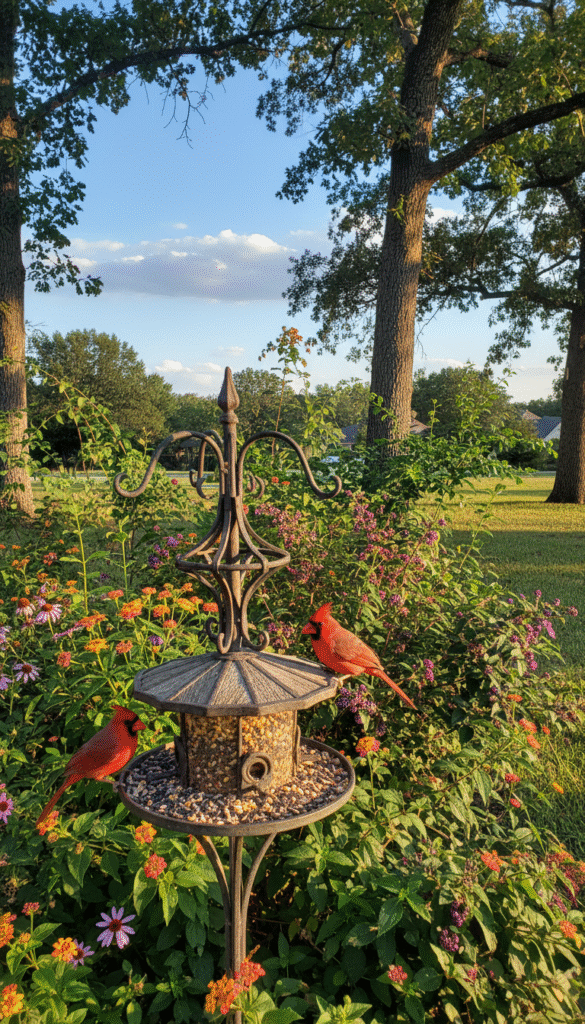 attract cardinals. In the foreground, a beautifully arranged bird feeder filled with a variety of seeds appeals to the eye. Two bright red northern cardinals perch on the feeder, their feathers catching the sunlight beautifully. In the middle ground, lush greenery, including native Texas plants and colorful flowers, surrounds the feeder, creating an inviting environment for birds. The background features a clear blue sky dotted with fluffy white clouds, framed by tall oak trees. The lighting is warm and golden, suggesting early morning or late afternoon, casting gentle shadows and enhancing the lush colors. The overall mood is serene and inviting, capturing the beauty of nature in a neighborhood setting, perfect for drawing cardinals." title="A vibrant scene showcasing a backyard in Tyler, Texas, designed to attract cardinals. In the foreground, a beautifully arranged bird feeder filled with a variety of seeds appeals to the eye. Two bright red northern cardinals perch on the feeder, their feathers catching the sunlight beautifully. In the middle ground, lush greenery, including native Texas plants and colorful flowers, surrounds the feeder, creating an inviting environment for birds. The background features a clear blue sky dotted with fluffy white clouds, framed by tall oak trees. The lighting is warm and golden, suggesting early morning or late afternoon, casting gentle shadows and enhancing the lush colors. The overall mood is serene and inviting, capturing the beauty of nature in a neighborhood setting, perfect for drawing cardinals." width="585" height="1024" class="aligncenter size-large wp-image-2408" srcset="https://yourbirdbuddy.com/wp-content/uploads/2026/04/A-vibrant-scene-showcasing-a-backyard-in-Tyler-Texas-designed-to-attract-cardinals.-In-the-585x1024.png 585w, https://yourbirdbuddy.com/wp-content/uploads/2026/04/A-vibrant-scene-showcasing-a-backyard-in-Tyler-Texas-designed-to-attract-cardinals.-In-the-171x300.png 171w, https://yourbirdbuddy.com/wp-content/uploads/2026/04/A-vibrant-scene-showcasing-a-backyard-in-Tyler-Texas-designed-to-attract-cardinals.-In-the.png 768w" sizes="auto, (max-width: 585px) 100vw, 585px" />
You can identify these birds by their distinctive "pew, pew, pew" call. It's a common sound in suburban landscapes across the United States.
Their range extends across most of the country east of the Rocky Mountains. This makes them a common sight in our region.
| State | Year Adopted | Note |
|---|---|---|
| Illinois | 1929 | First state to designate the cardinal |
| Indiana | 1933 | Chosen by the state legislature |
| Kentucky | 1926 | Official state bird since 1926 |
| North Carolina | 1943 | Selected by popular vote |
| Ohio | 1933 | Designated by the General Assembly |
| Virginia | 1950 | Adopted by Senate Joint Resolution |
| West Virginia | 1949 | Named the state bird in 1949 |
Utilizing resources like the Project FeederWatch tool is helpful. It allows you to customize your strategy for your local yard.
This ensures every species you desire feels welcome in your backyard. Mimicking natural woodland edges provides safety and foraging spots.
Understanding Cardinal Behavior and Seasonal Needs
Observing the annual cycle of these red-feathered residents reveals specific needs for each season. Their survival depends on adapting to changes in food and shelter.
Knowing their habits helps you provide consistent support. This builds trust and encourages them to stay.
Unique Characteristics of Cardinals
The Northern Cardinal can live over three years in the wild. A strong, cone-shaped beak is its perfect tool for cracking tough seeds.
Females showcase impressive skill when building a nest. This careful construction is followed by an 11 to 13-day incubation period.
Seasonal Feeding Patterns and Territorial Habits
Spring brings a major shift. Parent birds hunt insects almost exclusively to feed their growing chicks.
This protein is vital for the young birds' rapid development. Fledglings will leave the nest just 9 to 11 days after hatching.
Male cardinals become fiercely protective of their space each year. They may even see their reflection as a rival during this time.
Understanding these patterns is the first step to creating a supportive habitat. It allows your yard to meet their needs all year long.
Choosing the Ideal Feeders for a Stable Feeding Experience
Stability is the most important factor when picking out a feeder for robust avian visitors. A songbird weighing 1.5 to 2 ounces needs a solid place to perch. Wobbly or swinging designs will simply scare them away.
Feeder Designs that Work Best for Cardinals
Experts consistently recommend hopper feeders with wide, flat trays. This design offers the steady surface a heavy bird requires. It lets them face forward comfortably while they eat.
Platform feeders are another excellent choice. They copy the natural ground-foraging behavior of these species. Multiple visitors can share the space peacefully.
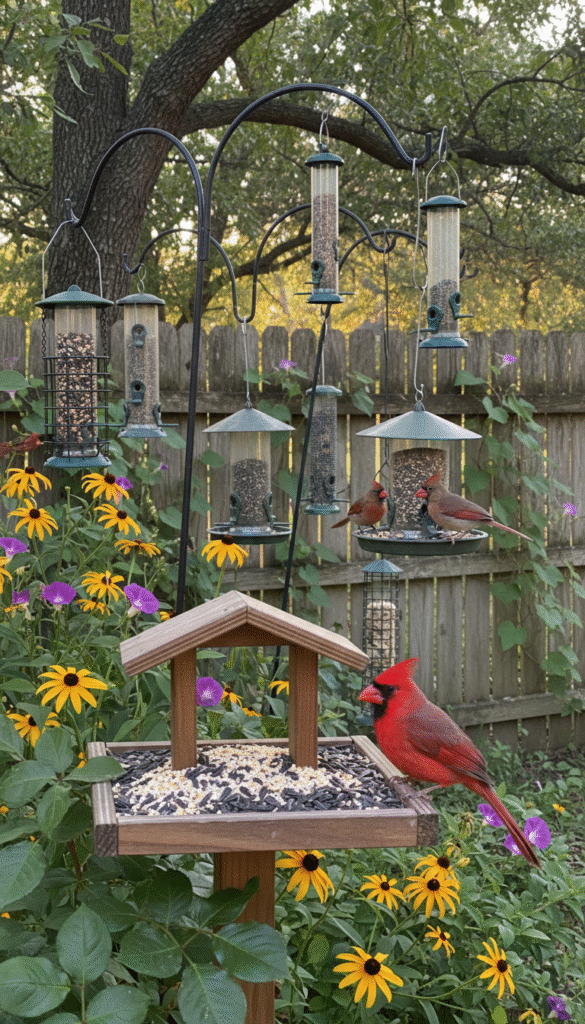
A well-built hopper does more than provide a meal. Its roof protects seeds from rain and wind. This keeps food dry and appealing all day long.
| Feeder Type | Best For | Key Feature | Consideration |
|---|---|---|---|
| Platform | Natural foraging & groups | Open, flat surface | Requires more frequent cleaning |
| Hopper | Weather protection & stability | Enclosed seed reservoir | Ensure tray is wide enough |
You should avoid tiny, acrobatic-style feeders. They force a bird to perform awkward maneuvers. Your goal is a secure, flat platform that invites confidence.
Effective Strategies to attract cardinals Texas feeder
Strategic placement of your feeding stations can make all the difference for welcoming vibrant songbirds. Your layout choices provide safety and ease, encouraging regular visits.
Tips for Optimal Feeder Placement and Accessibility
One of the best tips is to position your feeder five to ten feet from dense shrubs. This gives birds quick access to escape cover from predators.
These species often forage on the ground in nature. Allowing some seed to fall creates a natural feeding zone.
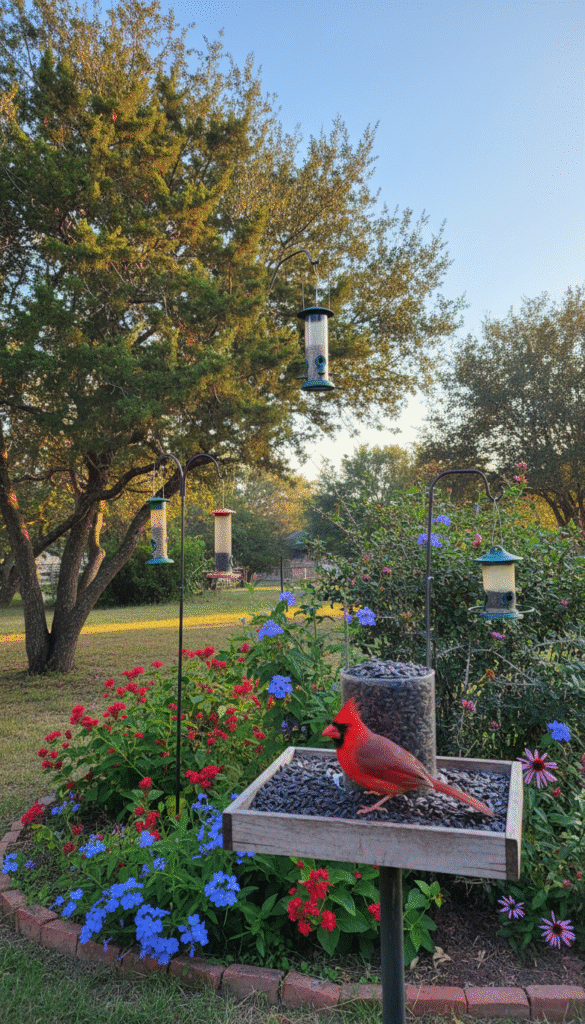
Setting up multiple feeders across your yard reduces bullying. It ensures every bird finds a meal.
Keep a consistent refill schedule. A reliable food source builds trust. Also, maintain clear sight lines around your station.
| Placement Strategy | Primary Benefit | Key Consideration |
|---|---|---|
| Near Shrub Cover | Quick escape from threats | Maintain 5-10 foot distance |
| Open Ground Area | Mimics natural foraging | Keep area clean of debris |
| Multiple Stations | Reduces bird competition | Spread throughout the property |
| Consistent Refilling | Encourages daily returns | Check levels at same time each day |
These simple tips create a secure environment. Your yard becomes a dependable sanctuary where beautiful birds thrive.
Best Seed and Nut Options for Cardinals
The key to welcoming brilliant songbirds lies in offering the right menu. It must be tailored to their powerful beaks and high-energy needs. Choosing the correct food builds a reliable sanctuary.
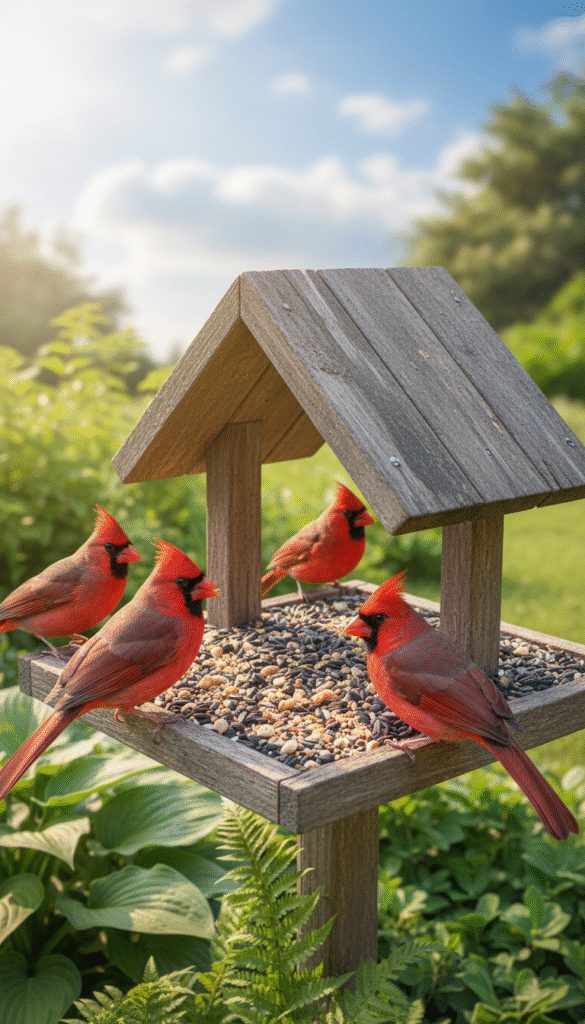
Advantages of Black Oil Sunflower Seeds
Black oil sunflower seeds are the top choice for a reason. They pack a high-fat and protein content. This provides essential energy for survival, especially in cold months.
The thin shell is easy for a strong bill to crack. Ornithologist Gary Ritchison notes the cardinal's downward-curved bill is perfectly adapted for this. It allows for efficient consumption of the nutritious kernel inside.
Benefits of Safflower Seeds in Minimizing Squirrel Intrusion
Safflower seeds are a secret weapon for bird lovers. They have a bitter taste that repels squirrels and grackles. However, cardinals can easily crack them with their larger jaw muscles.
Mixing safflower into your food blend creates a specialized source. It naturally discourages unwanted squirrels from your yard. This ensures more meals are available for your preferred visitors.
| Seed Type | Primary Benefit | Key Nutrient | Best Use Tip |
|---|---|---|---|
| Black Oil Sunflower | High-energy favorite | Fat & Protein | Use in hopper or platform feeders |
| Safflower | Selectively deters pests | Oil & Protein | Mix with sunflower to start |
Complementary Water Features: Birdbaths and Drippers
Beyond seeds and shelter, providing fresh water completes the ideal habitat for resident songbirds. A reliable source is essential for both drinking and feather maintenance.
This makes your outdoor space a more desirable destination for local wildlife.
Maintaining Fresh and Accessible Water Sources
Birdbaths should be shallow, only one to two inches deep. This allows a bird to stand comfortably while bathing.
Adding flat rocks to a deeper basin creates a safe, stable platform. It mimics the gentle slopes of a natural water source.
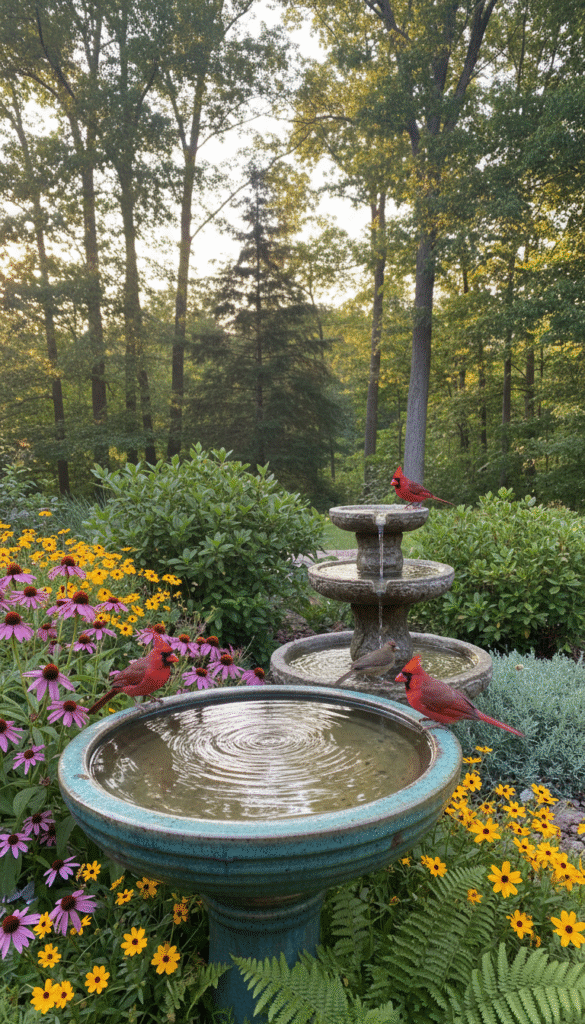
During winter, a heated birdbath is a vital resource. It prevents dehydration when other sources are frozen.
Experts recommend scrubbing birdbaths every two to three days. This routine keeps the water fresh and free from harmful bacteria.
| Feature | Key Benefit | Maintenance Tip |
|---|---|---|
| Shallow Depth (1-2") | Safe bathing & standing | Use flat rocks to adjust depth |
| Heated Element | Prevents winter freezing | Use a submersible, outdoor-rated heater |
| Regular Cleaning | Prevents disease | Scrub every 2-3 days with a brush |
Place your birdbath in a visible part of your yard, near protective cover. This balance helps cardinals feel secure as they visit your feeder and water station.
Designing a Cardinal-Friendly Habitat with Native Shrubs and Trees
The foundation of a welcoming environment for songbirds is a well-designed habitat with native plants. Your yard becomes a secure sanctuary when it mimics the natural woodland edges these species prefer.
This approach provides essential shelter and natural food sources all year long.
Choosing the Right Vegetation for Shelter and Nesting
These birds prefer to build their nesting site in dense vegetation. Ideal spots are typically three to fifteen feet above the ground.
Native shrubs like dogwood and serviceberry offer perfect cover. They also produce berries that serve as a crucial food source.
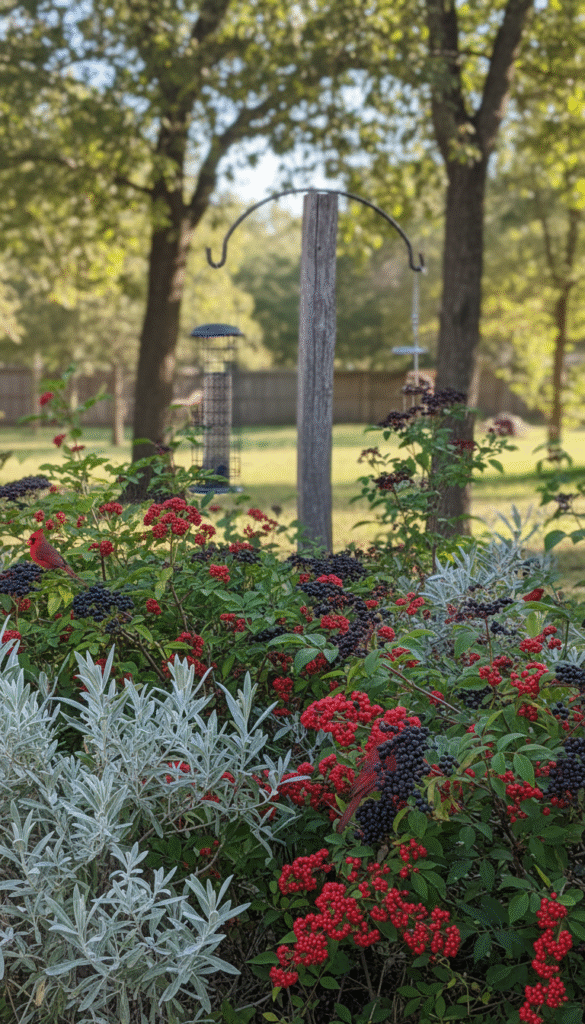
Evergreen trees such as juniper are vital for winter shelter. They provide protection when deciduous plants lose their leaves.
Creating Natural Cover and Feeding Zones
Gary Ritchison notes that these birds often forage low to the ground. Planting dwarf shrubs creates a welcoming ground-level zone.
A layered habitat with different heights is key. It offers safe foraging spots and elevated lookout perches.
Including butterfly host plants like dill supports insect populations. This provides protein for growing chicks.
Your thoughtful landscaping turns the space into a complete habitat. It supports every need from nesting to finding daily meals.
Minimizing Threats: Predators, Reflections, and Competition
A truly welcoming yard must account for the hidden hazards that threaten visiting songbirds. From roaming pets to confusing glass, several common issues can undermine your efforts.
Strategies for Cat Safety and Window Collision Prevention
Free-roaming cats pose a severe danger to local wildlife. Keeping pets indoors is a simple, effective way to protect your avian visitors.
During spring, males may attack their own reflection in windows. Applying anti-reflective film breaks up these reflections and prevents confusion.
Place your feeder very close to glass—within three feet. This stops songbirds from building dangerous speed if they fly toward the window.
In winter, flocks form and competition rises. Setting up multiple feeders across your area ensures everyone gets a meal.
Avoid chemical pesticides in your yard. This preserves insects that parent songbirds use to feed their young.
| Threat | Prevention Strategy | Key Benefit |
|---|---|---|
| Cat Predation | Keep cats indoors | Direct protection for ground-foraging songbirds |
| Window Collisions | Use decals or film on glass | Eliminates confusing reflections |
| Bird Competition | Provide multiple feeding stations | Reduces aggression during winter flocks |
| Chemical Pesticides | Choose natural pest control | Preserves vital insect food sources |
Conclusion
Creating a haven for vibrant songbirds enriches your daily life with natural beauty. Your commitment to offering the right food, like black oil sunflower and safflower seeds, is fundamental. A reliable food source and clean water establish a sanctuary these birds will visit daily.
Since these avian residents are non-migratory, they remain in your area all year. Consistent filling of your feeder during the winter is especially important. Always choose a stable platform or hopper style, as it suits their preference for ground-level dining.
Follow these tips to transform your yard into a permanent refuge. With the right habitat, you'll soon observe pairs nesting and foraging in your private space. Begin your journey now by stocking up on quality seeds and preparing your feeding station. The reward of brilliant red companionship awaits every season.
Enjoyed this post? Browse our Etsy shop!
Bird shirts, mugs & faith apparel · 122+ designs · ★★★★★ 5.0

0 Comments