
When the feeder looks quiet on a cold morning, lower your eyes. The patch of ground beneath it may be busier than the perches. A gray bird flashes white as it flies up, and a brown bird stops just long enough to show a bright patch under its bill. Those quick glimpses can be enough to make an ID.
These four sparrows are worth looking for in winter where their ranges overlap. Which ones visit depends on where you live. Start with the tail, throat, breast, or eye stripe, then use the bird’s shape and behavior to double-check.
1. Dark-eyed Junco: Watch for white in the tail
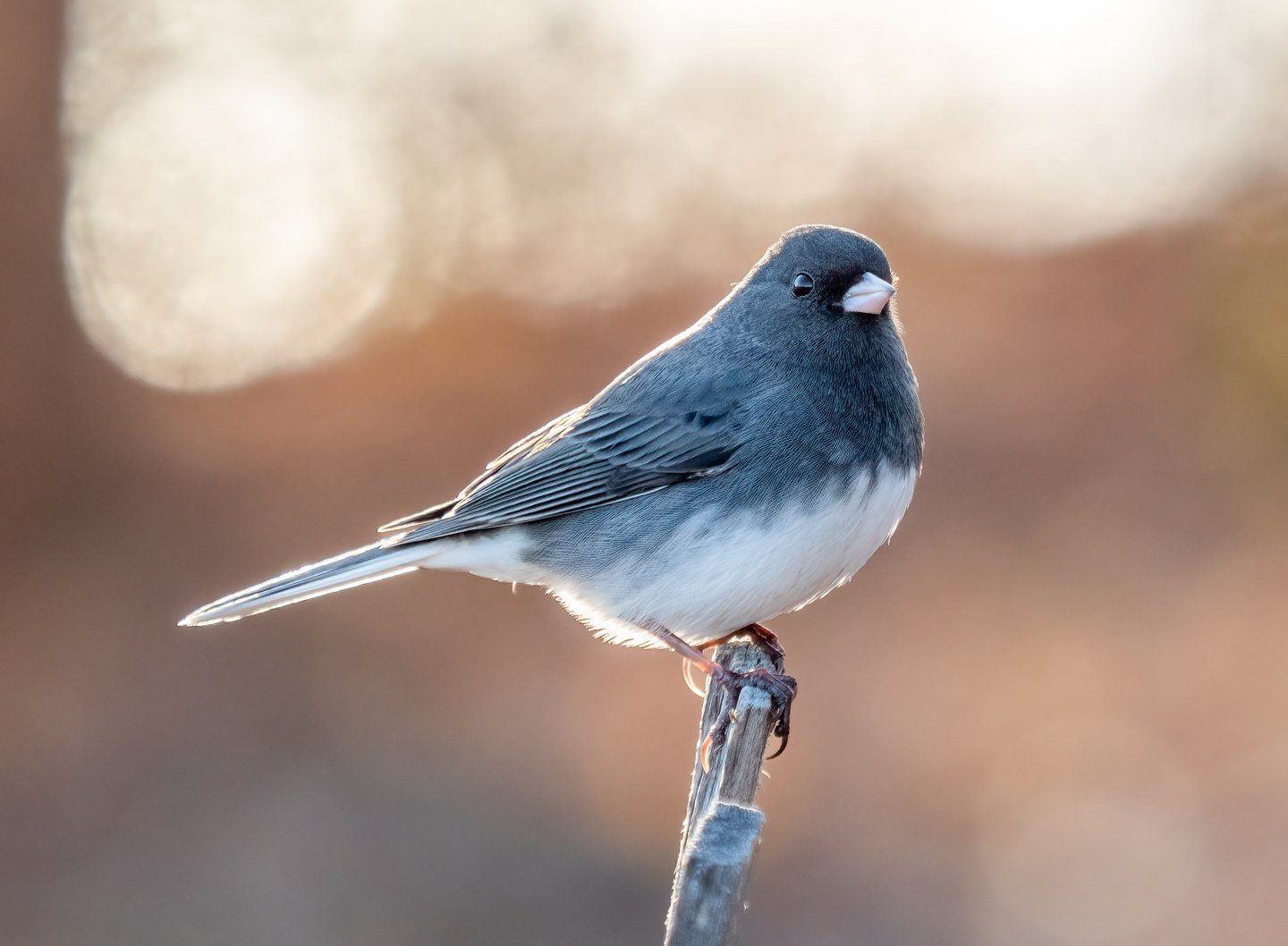
A slate-colored junco has a dark gray upper body, a white belly, and a small pinkish bill. Other forms can look browner or have a dark hood and warm-colored sides. When the bird hops up from the ground, look for a quick flash of white along the outer edges of the tail. That clue holds up even when the body color looks different from the bird in the photo.
2. White-throated Sparrow: Check the throat and face

Look for a neat white throat patch and a small yellow mark between the eye and the bill. Some adults have bold black-and-white crown stripes, while others have softer tan-and-brown stripes. The throat is often the easiest clue in shade. Watch the ground along a brushy edge, where one may step out to pick through the leaves.
3. Song Sparrow: Start with the streaked breast

A Song Sparrow usually shows bold brown streaks down the breast and sides. Several streaks often run together into a dark spot in the middle of the chest. Use the whole pattern to make the call, since other sparrows can show a chest spot too. A sturdy build and a fairly long, rounded tail give you two more clues when the bird turns sideways.
4. Chipping Sparrow: Look for a dark line through the eye

The bright rusty cap you may know from spring can be much duller in winter. Look for a slender bird with a thin dark line running through the eye and pale, mostly unstreaked underparts. If a little group is hopping through short grass, pick one bird and follow it until you get a clear side view. The face pattern is easier to see when the bird pauses.
Try a five-minute watch from your window
Pick a window with a clear view of the feeder and the ground around it. Scan the base of nearby shrubs, then follow one bird at a time. Ask yourself what you saw clearly: white on the tail, a white throat, chest streaks, or a dark eye stripe. A quick note about that one feature can help you identify the bird the next time it comes back.
If ground-feeding birds already visit, a low tray with a small amount of white proso millet can give you a clearer view. Keep the seed dry and remove damp leftovers and old hulls. You can also start with the feeder you already have and watch where birds gather beneath it.
For more setup ideas, see what to feed backyard birds in winter and our winter backyard birding checklist.
For side-by-side comparisons and range maps, visit the Cornell Lab of Ornithology’s winter sparrow identification guide.


0 Comments