A chickadee lands, takes one sunflower seed, and vanishes into the branches. A moment later, another bird repeats the trip. By lunchtime the feeder looks surprisingly empty, even though hardly anyone seemed to sit down for a meal.
Late fall is a rewarding time to watch where those seeds go. Some birds carry food away to open it or eat in cover. Others hide it for later, a behavior called caching. Learning the difference gives an ordinary feeder watch a new purpose: follow the food beyond the feeding port.
You can try this from a window, porch, or comfortable chair. You need a clear view, a few quiet minutes, and a willingness to write “not sure” when a bird disappears behind a branch.
Why birds put food aside
The Cornell Lab of Ornithology explains that food caching can happen throughout the year, but becomes especially noticeable in fall when abundant seeds allow birds to store a surplus. Hidden food can provide another option when fresh food becomes harder to obtain. A cache might be tucked into a tree rather than gathered into one obvious pile. See Cornell’s explanation of why birds fly away with seeds.
That distinction matters when you judge a feeder’s popularity. A falling seed level tells you food has been removed. It cannot tell you how much was swallowed, stored, spilled, or carried away by another animal. Keep those possibilities separate before buying a larger feeder or changing your seed.
Nor does every backyard species use this strategy. Cornell’s food-storage overview identifies chickadees, nuthatches, jays, crows, and some woodpeckers as caching birds. Many familiar sparrows, finches, and doves do not store food this way. Start with the birds actually visiting your yard.
Chickadees: watch the next branch
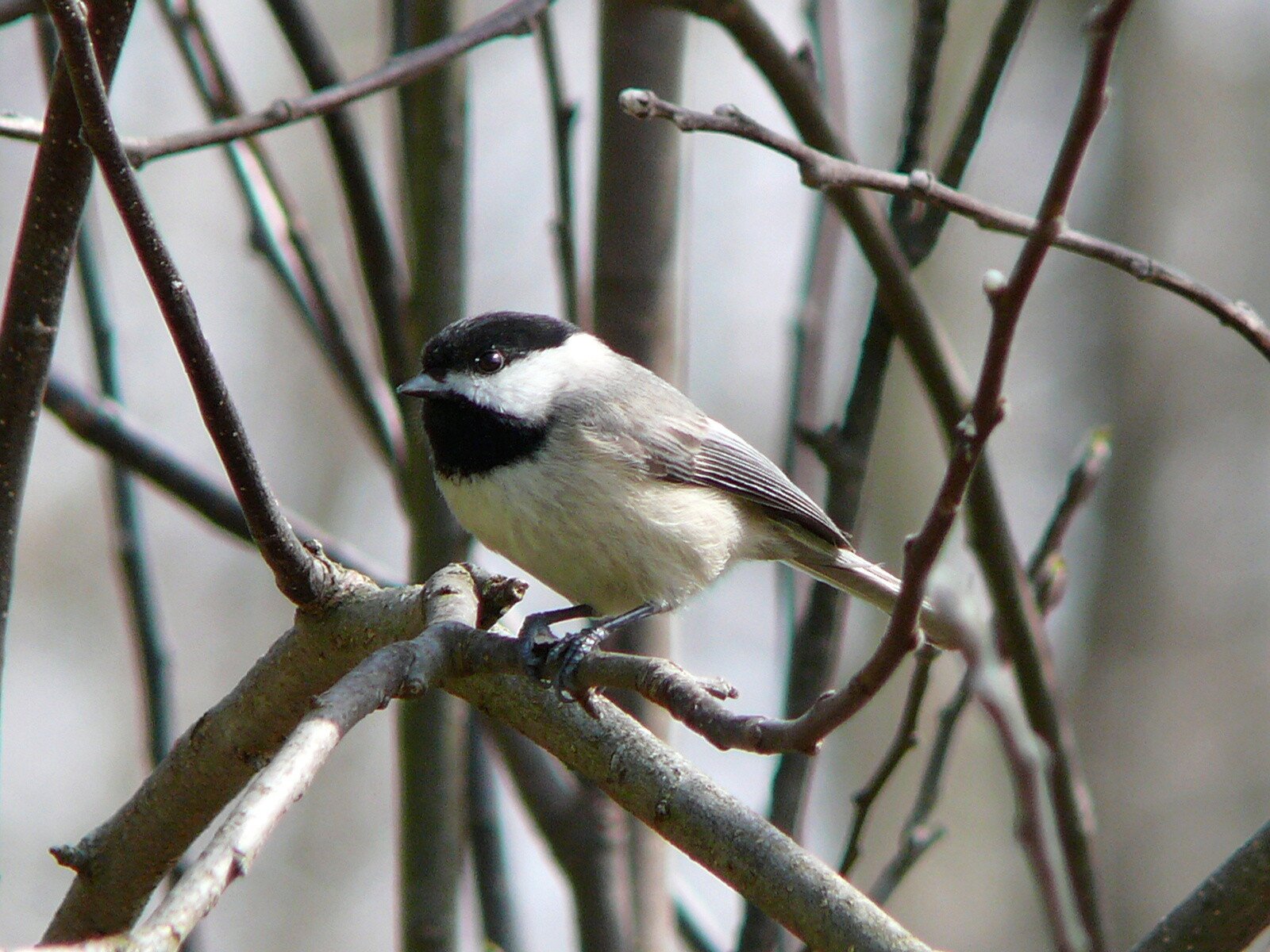
Chickadees make an excellent starting point because their feeder visits can be brief. The Carolina Chickadee pictured here has a black cap and throat, white cheeks, and gray upperparts. Cornell notes that this species often takes a seed to a secluded branch to eat it. Sunflower seeds, peanut pieces, and suet are among its feeder foods; peanuts must stay dry. The Carolina Chickadee guide also explains how similar it looks to a Black-capped Chickadee.
Watch the bird’s bill after it leaves. Can you still see the food? Does it settle on a perch and work on it, or move to a narrow gap? Resist labeling the trip too soon. A bird holding and hammering a seed may simply be preparing its meal.
Across northern areas, Black-capped Chickadees offer another opportunity: Cornell specifically documents their habit of hiding food. In western mountain forests, Mountain Chickadees also store food and may remove sunflower shells before stashing the contents. Use your local species guide rather than assuming every chickadee is the one in the photograph.
Tufted Titmice: one seed at a time
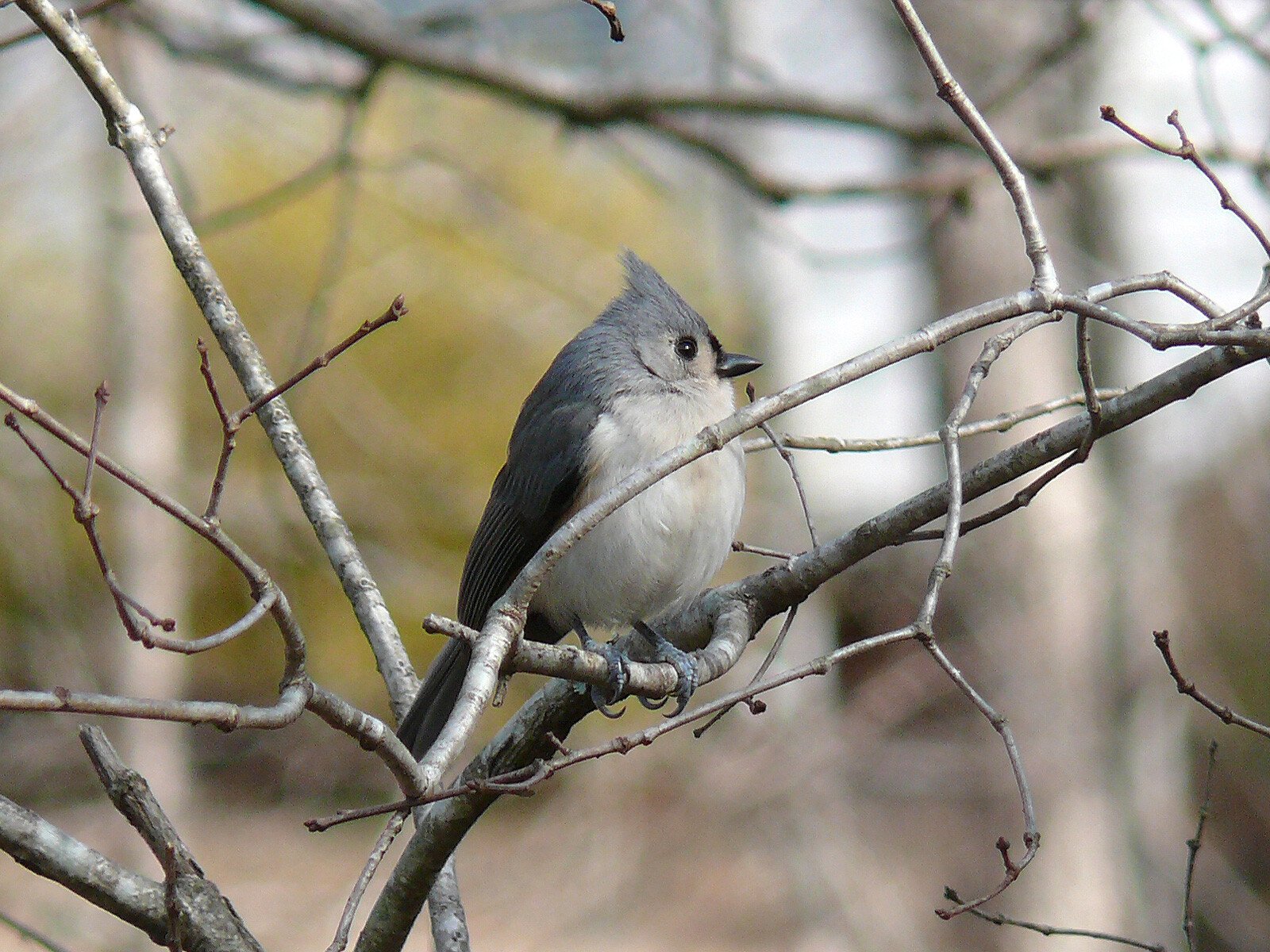
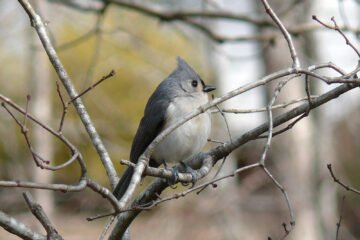
In eastern North American woodland yards, look for the pointed gray crest and large dark eye of a Tufted Titmouse. Cornell describes fall and winter food hoarding in this species: birds carry one seed per trip and often remove the shell before hiding it. Their storage sites are usually relatively near the feeder, making them good subjects for a patient window watch. Read the Tufted Titmouse species account.
Try choosing one visible branch junction as your observation point. When a titmouse arrives there, follow the whole sequence rather than immediately turning back toward the feeder. Note any shell opening, movement to a second branch, and whether the food remains visible.
Cornell’s life-history account describes shelled seeds being stored in bark crevices. That makes a quick poke into bark worth watching. Still, a brief visit to a crevice alone cannot prove that food was deposited. Record the action you saw and leave the interpretation open when the view is poor.
White-breasted Nuthatches: look closely at bark
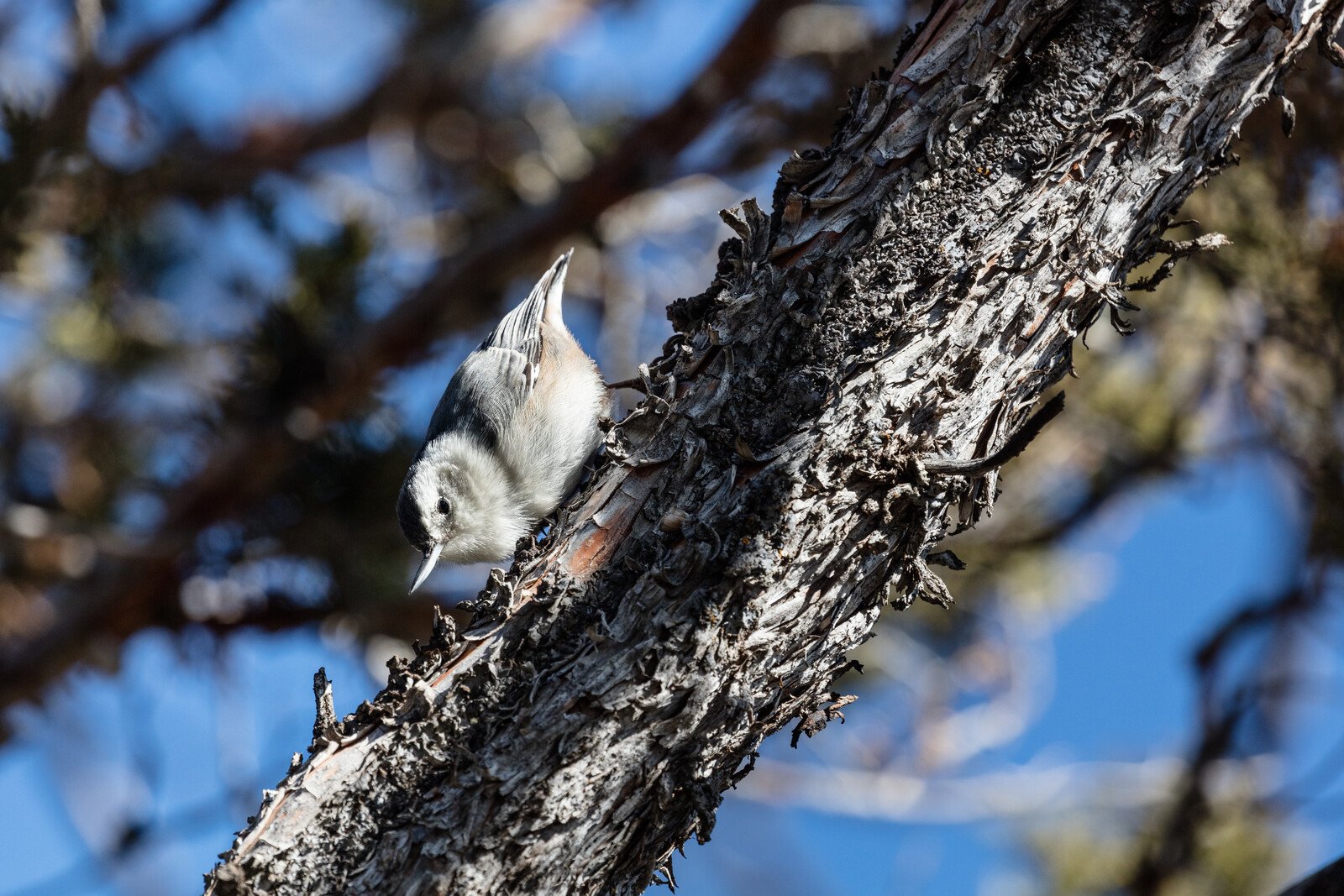
A White-breasted Nuthatch can make a tree trunk look like a busy walkway. These birds travel upward, sideways, and headfirst downward, searching bark for food. Cornell reports that they also store seeds and insects under loose bark, sometimes covering the food with bark, lichen, moss, or snow. They may wedge a large seed into bark and hammer it open, too. Both activities can happen on the same tree; see the White-breasted Nuthatch life history.
From your seat, choose a section of trunk with a clear view. Watch for a bird arriving with something in its bill, placing it, and departing without it. A later return to remove food would provide stronger evidence of a cache, although you may never witness that return.
Leave the hiding place alone. You do not need to lift bark, poke a hole, or recover a seed to enjoy the discovery. If identifying the bird is the difficult part, our guide to nuthatches and Brown Creepers will help you compare their movements and appearance.
Blue Jays: follow the larger deliveries
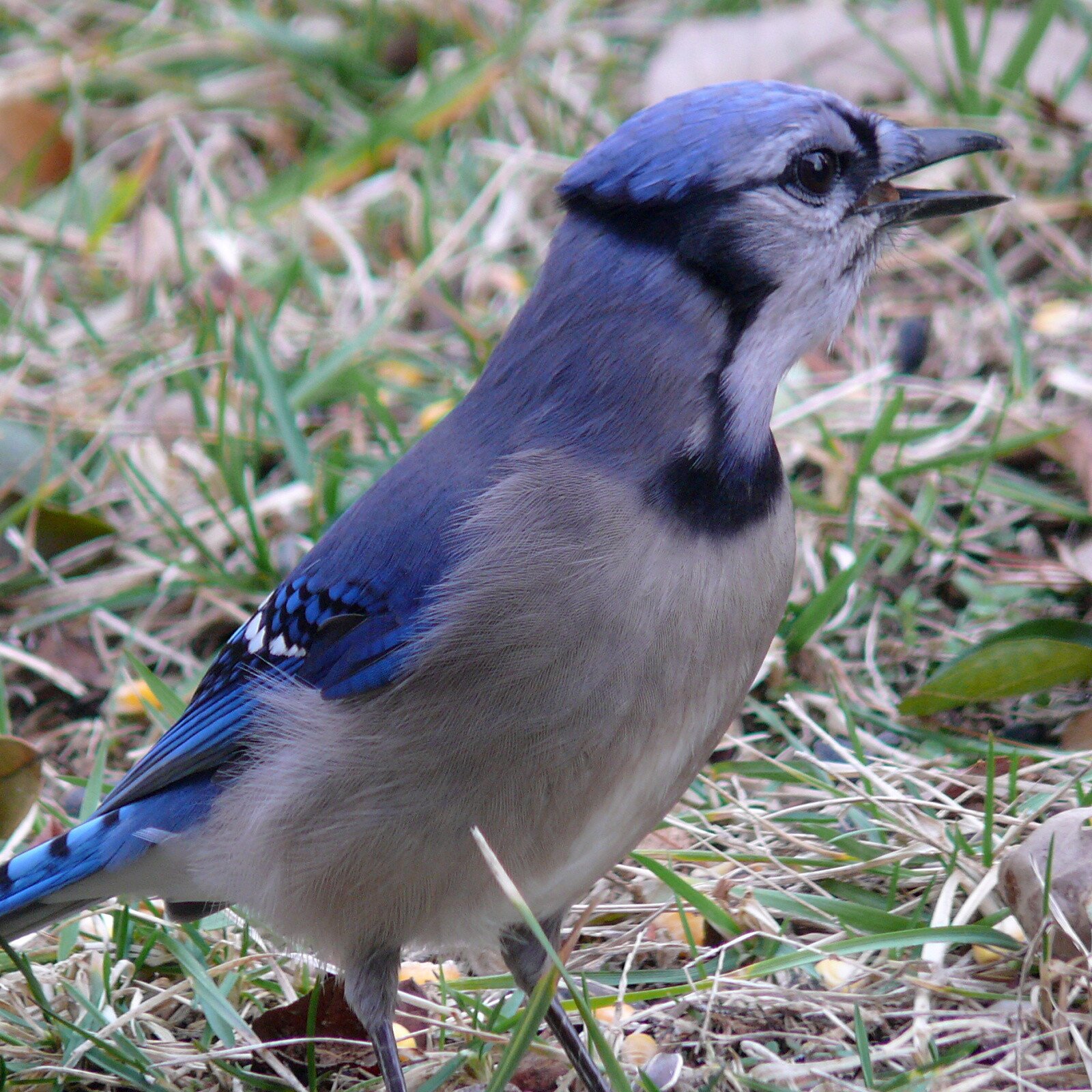
Blue Jays bring a different scale to food storage. Cornell documents their habit of caching nuts and seeds, including acorns. They can transport several acorns in one journey using their throat and upper esophagus as well as their mouth and bill. They also hold food with their feet while opening it. These behaviors are described in the Blue Jay life-history account.
If a jay takes food beyond your viewing area, let it go. Another visible trip may offer a better opportunity. Use an oak trunk, fence corner, or planting bed as a reference point in your notes rather than following the bird around the yard.
A jay standing near scattered food is not necessarily caching, and the photograph above shows feeding rather than a confirmed storage event. That same caution makes your own observations more useful: separate what the bird held, where it went, and what you actually saw it do.
Try a 15-minute seed-following session
Choose a period when birds are already visiting and watch from one settled position. Spend the first few minutes identifying your subjects. For the next ten minutes, follow individual departures as far as your view allows. Finish by reviewing what you recorded.
Make four simple columns: species, food carried, next visible action, and confidence. Useful entries include “titmouse, sunflower seed, hammered on branch, eating likely” or “nuthatch, small item, placed behind bark, possible cache.” These are sample entries, not observations from a particular yard.
Count trips separately from birds. Ten visits could include repeat appearances by the same individual. If a second bird enters the scene and you lose track, start a new line rather than guessing which one returned. Binoculars can help, but keeping the bird in view matters more than magnification.
Repeat the session on another day using the same viewing position. Compare actions rather than trying to establish a backyard record. For a broader identification exercise, pair it with our guide to spotting mixed-species winter flocks.
What if you never see a cache?
An inconclusive watch is still worthwhile. Change one part of your setup next time: choose a seat with a clearer view of the nearest tree, watch a different feeder visitor, or begin when the sun lights the branches instead of shining into your eyes. Keep the feeding arrangement steady while you work on seeing more of each trip.
You can also take a short video from your observation spot and review the visible sequence afterward. Describe a disappearing food item as uncertain if a twig or the bird’s body blocks the crucial moment. A photograph of a bird with a seed documents that instant; it cannot establish what happened after the shutter clicked.
Avoid putting labels on individual birds unless you can reliably recognize them. “A chickadee returned” is a sounder note than “the same chickadee retrieved its seed” when several similar birds are present. Careful uncertainty is a useful birding skill.
Support the birds without overfilling the yard
Keep your feeding routine manageable. Audubon’s winter bird-food guide includes sunflower seed and unsalted peanuts among useful options. Offer food in an appropriate feeder, keep it dry, and remove old remnants before refilling. An empty feeder does not create an obligation to scatter extra piles into shrubs or push seeds into bark yourself.
Cleanliness still matters during a busy caching spell. Cornell’s Project FeederWatch handbook recommends cleaning seed feeders about every two weeks, more often with heavy use or warm, damp conditions. Our bird-feeder cleaning guide can help you turn that into a routine. Remove damp debris beneath the station as part of your check.
Think beyond purchased food, too. Audubon recommends locally native plants for natural seeds, insects, berries, and refuge. Before your next garden purchase, identify one plant suited to your location and available space. A useful winter yard can grow gradually.
Next time a bird leaves with a seed, watch the next stop. You may see lunch being opened, a hidden reserve being made, or simply a bird slipping out of sight. Each outcome gives you a better question to follow on tomorrow’s watch.

0 Comments