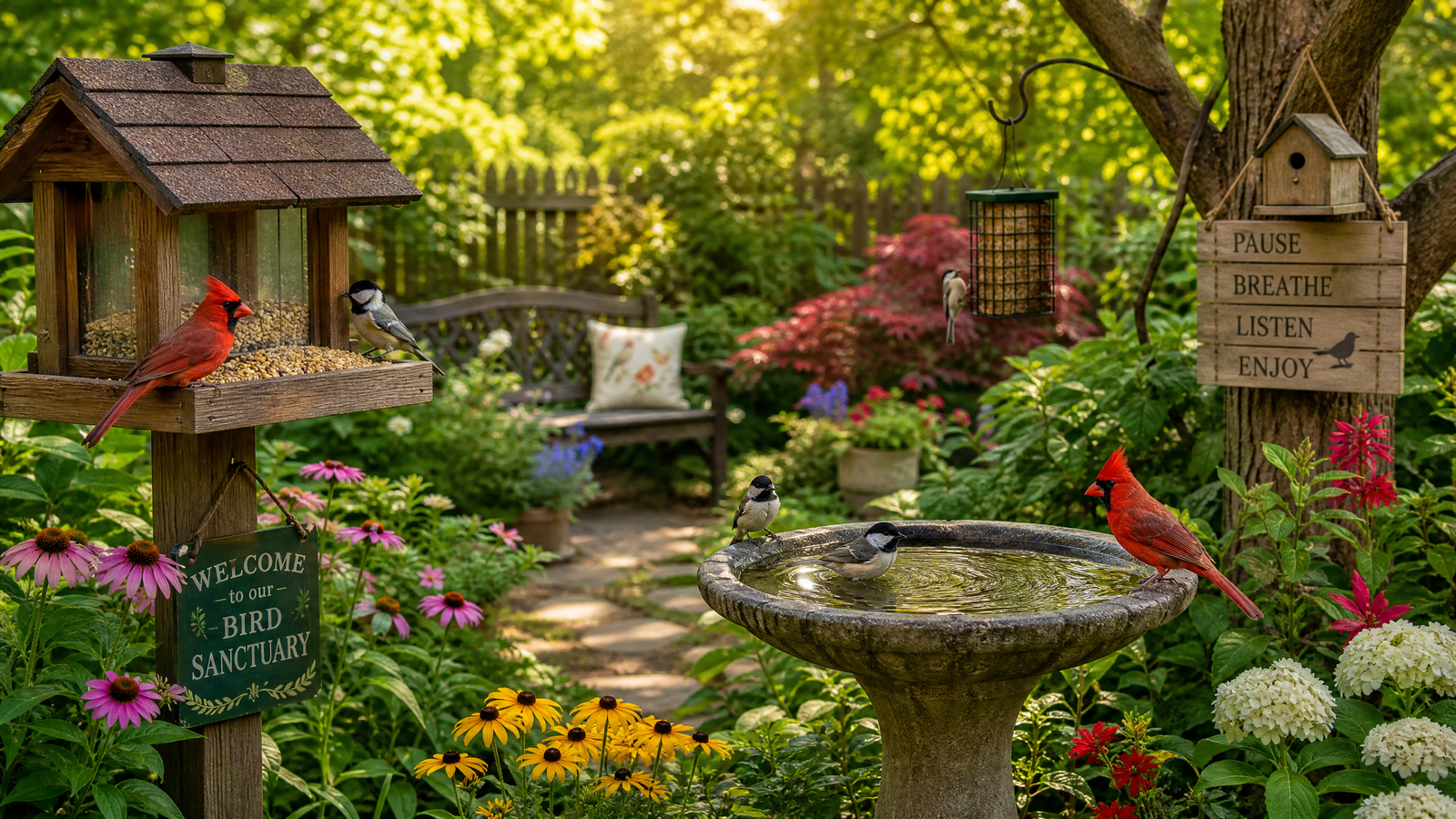
Creating a backyard bird sanctuary doesn't require a massive budget or a degree in landscaping. With a little planning and some strategic choices, you can transform even a small yard into a thriving haven for your feathered friends.
🐦 Shop Our Collection
Faith-Inspired Bird Shirts & Gifts
Scripture-inspired tees, mugs & gifts for the bird-loving believer. 27+ designs · Fast shipping.
Step 1: Food, Water, and Shelter
Love Birds? Shop Our Etsy Store!
Faith-filled bird shirts, mugs & gifts — beautifully printed & shipped fast. 122+ designs, 5-star rated.
🛒 Shop YourBirdBuddyShop on EtsyEvery successful bird sanctuary provides three essential elements: food, water, and shelter. Start with a simple tube feeder for small birds and a platform feeder for larger birds like cardinals and jays. A shallow, sturdy plastic or ceramic dish works perfectly as a birdbath — just ensure the water is no more than two inches deep. If you don't have mature trees, consider planting native shrubs or creating a small brush pile in a quiet corner of your yard.
Step 2: Choose the Right Seed
One of the biggest mistakes beginners make is buying cheap “wild bird mix” from the grocery store. These mixes are often filled with milo and red millet — seeds that most backyard birds will simply toss on the ground. Instead, invest in black oil sunflower seed. It's the gold standard of bird food, loved by a wide variety of species including cardinals, chickadees, nuthatches, and finches. For finches specifically, add a small tube feeder filled with Nyjer (thistle) seed.
Step 3: DIY Your Bird Feeders
If you're on a tight budget, consider making your own feeders. A large pinecone rolled in natural peanut butter and then coated in birdseed makes a wonderful free feeder that birds love. Simply hang it from a branch with a piece of twine. Clean, empty plastic bottles can also be converted into tube feeders with a few carefully placed holes and some wooden dowels for perches.
Step 4: Add Native Plants
Native plants are the single best long-term investment you can make for your bird sanctuary. They provide natural food sources, nesting materials, and shelter — all for free, once established. Coneflowers, sunflowers, native grasses, and berry-producing shrubs like elderberry and viburnum are all excellent choices.
Step 5: Keep It Clean
A healthy sanctuary is a clean sanctuary. Dirty feeders and birdbaths can spread diseases quickly. Clean your feeders every two weeks with a mild bleach solution (one part bleach to nine parts water), rinse thoroughly, and let them dry completely before refilling. Change the water in your birdbath every few days to keep it fresh.
You Might Also Enjoy
Enjoyed this post? Browse our Etsy shop!
Bird shirts, mugs & faith apparel · 122+ designs · ★★★★★ 5.0