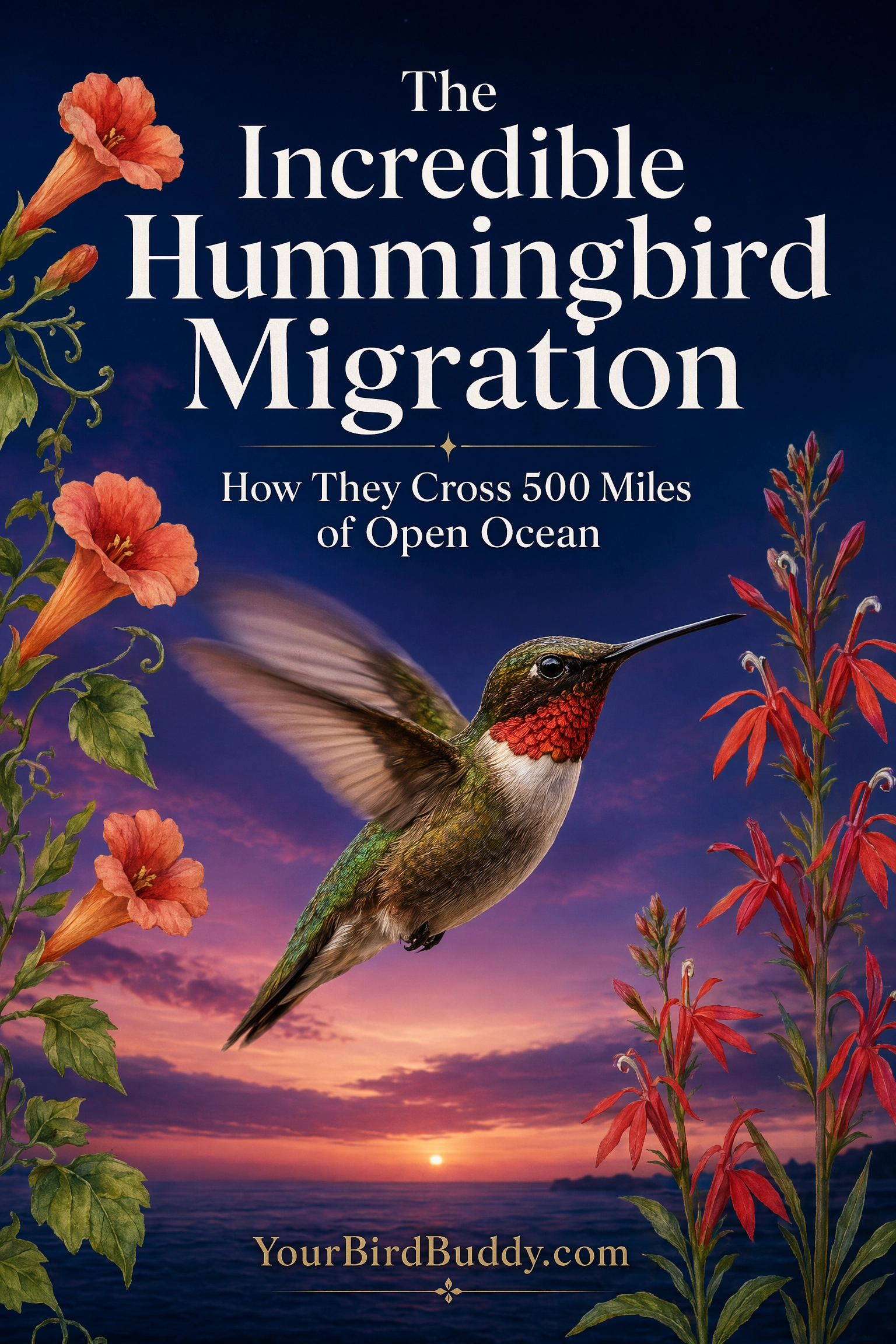
Weighing less than a penny and smaller than your thumb, the Ruby-throated Hummingbird makes one of the most astonishing migrations in the animal kingdom — crossing the entire Gulf of Mexico in a single, non-stop flight.
If you’ve ever watched a hummingbird hover at your feeder, it’s hard to believe that tiny creature is capable of flying 500 miles over open ocean without stopping. But every spring and fall, millions of hummingbirds do exactly that. Here’s everything you need to know about hummingbird migration — including when they arrive, where they go, and how you can help them along the way.
When Do Hummingbirds Migrate?
Hummingbird migration is triggered primarily by changes in daylight length (photoperiod), not temperature or food availability. This means hummingbirds begin their journey south even when your feeders are still full and the weather is still warm.
Spring Migration (Northbound): Males arrive first, typically 1–2 weeks ahead of females. Gulf Coast states see arrivals as early as late February to early March. The Midwest and Northeast see arrivals from late April through May. Canada sees arrivals in late May to early June.
Fall Migration (Southbound): Adult males begin departing as early as late July. Females and juveniles follow through August and September. Most hummingbirds have left the eastern US by mid-October.
Where Do Hummingbirds Go in Winter?
Love Birds? Shop Our Etsy Store!
Faith-filled bird shirts, mugs & gifts — beautifully printed & shipped fast. 122+ designs, 5-star rated.
🛒 Shop YourBirdBuddyShop on EtsyMost Ruby-throated Hummingbirds — the most common species in eastern North America — spend their winters in Mexico and Central America, primarily in the lowland forests of southern Mexico, Guatemala, Honduras, and Costa Rica.
Western species like Anna’s Hummingbird are year-round residents along the Pacific Coast, while Rufous Hummingbirds travel the longest migration route of any North American hummingbird — up to 3,900 miles from Alaska to Mexico.
The Gulf of Mexico Crossing
Perhaps the most jaw-dropping aspect of Ruby-throated Hummingbird migration is the Gulf crossing. Rather than taking the longer overland route around the Gulf, many hummingbirds fly straight across — a non-stop journey of roughly 500 miles over open water.
This flight takes approximately 18–22 hours and requires the birds to nearly double their body weight in fat reserves beforehand. A hummingbird preparing for the Gulf crossing will spend weeks gorging on nectar and insects, building up the fuel it needs for the journey.
5 Ways to Help Migrating Hummingbirds
1. Keep Feeders Up Through Fall
One of the most persistent myths is that leaving feeders up in fall will prevent hummingbirds from migrating. This is false. Hummingbirds migrate based on daylight, not food availability. Keeping your feeders stocked through October (or even November in the South) provides critical fuel for late migrants.
2. Use the Right Nectar Recipe
The correct ratio is 1 part white granulated sugar to 4 parts water. Boil the water, stir in the sugar until dissolved, and let it cool before filling your feeder. Never use honey, brown sugar, artificial sweeteners, or red dye — these can harm hummingbirds.
3. Plant Native Flowers
Hummingbirds rely heavily on native flowering plants during migration. Top choices include trumpet vine, cardinal flower, bee balm, salvia, and coral honeysuckle.
4. Clean Your Feeders Frequently
In warm weather, nectar can ferment and grow mold within 2–3 days. Clean feeders with hot water (no soap) every 2–3 days, or every day in temperatures above 90°F.
5. Provide Perches and Shelter
Hummingbirds need places to rest and sleep during migration. Small trees, shrubs, and even clotheslines give them safe perching spots near your feeders.
Fascinating Hummingbird Migration Facts
- A hummingbird’s heart beats up to 1,260 times per minute during flight
- They can fly up to 30 mph in straight flight and 60 mph in a dive
- Hummingbirds have an excellent memory and will return to the same feeders year after year
- They enter a state called torpor at night — a deep, sleep-like state where their heart rate and metabolism drop dramatically to conserve energy
- The oldest known Ruby-throated Hummingbird lived to be 9 years old
The Bottom Line
Hummingbird migration is one of nature’s most extraordinary events — and your backyard can play a small but meaningful role in supporting these incredible travelers. A clean feeder, the right nectar, and a few native plants can make your yard a welcome rest stop on one of the world’s most remarkable journeys.
Celebrate your love of hummingbirds year-round with our collection of hummingbird-themed shirts, mugs, and gifts — designed for bird lovers who believe every feather is a reminder of His care.
Related Posts
- 10 Proven Tips to Attract More Birds to Your Backyard This Season
- 7 Bird Feeding Mistakes You’re Probably Making
- How to Identify Birds by Their Songs: A Beginner’s Guide
Enjoyed this post? Browse our Etsy shop!
Bird shirts, mugs & faith apparel · 122+ designs · ★★★★★ 5.0


0 Comments