Modern life moves fast. Deadlines buzz and screens demand our constant attention. This pace can leave us feeling drained and anxious.
🎁 Perfect Gifts for Every Bird Lover
Thoughtful, unique gifts that bird lovers will actually treasure.
🛒 Shop Bird Lover Gifts on Etsy


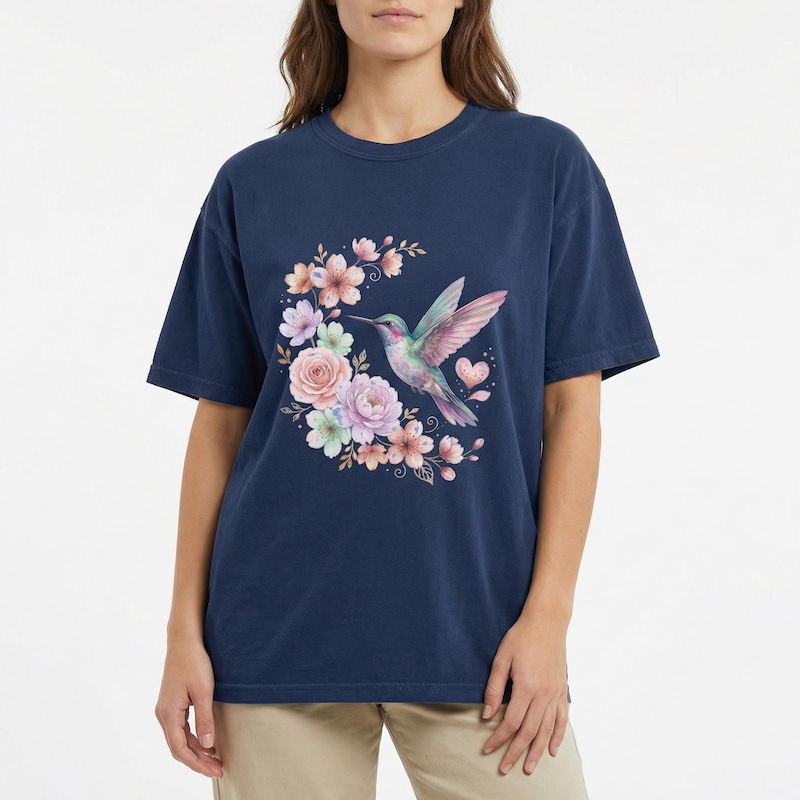

There's a simple, powerful way to hit the pause button. It doesn't require an appointment or a hefty bill. Stepping outside with a pair of binoculars can change your entire day.
When you watch a bird, you must be still and quiet. Your attention locks onto its movements and sounds. This act naturally pulls your mind away from swirling stress and into the present.
This practice is a form of mindfulness rooted in the real world. It builds a quiet connection with the trees, the sky, and the life around you. Many find this experience deeply restorative for their mental health.
Noticing the unique behavior of a species can spark a genuine sense of joy. It’s a free activity that grounds you and lifts your mood. For anyone struggling, remember that the 988 Suicide and Crisis Lifeline offers immediate support.
Key Takeaways
- Birdwatching provides a gentle escape from the constant demands of digital life.
- It trains your focus to stay in the present moment, reducing daily anxiety.
- The activity fosters a meaningful connection with the natural environment.
- Observing wildlife can bring unexpected joy and a sense of calm.
- It's an accessible way to support mental well-being without any cost.
- You can start right in your backyard; no special expertise is needed.
- This mindful practice offers real health benefits for people of all ages.
The Healing Power of Birdwatching
Love Birds? Shop Our Etsy Store!
Faith-filled bird shirts, mugs & gifts — beautifully printed & shipped fast. 122+ designs, 5-star rated.
🛒 Shop YourBirdBuddyShop on EtsyIn the 1980s, Japan formalized a practice that echoes what birders have always known: nature's rhythms are a powerful antidote to stress. They called it shinrin-yoku, or forest bathing, to help people recover from urban pressure.
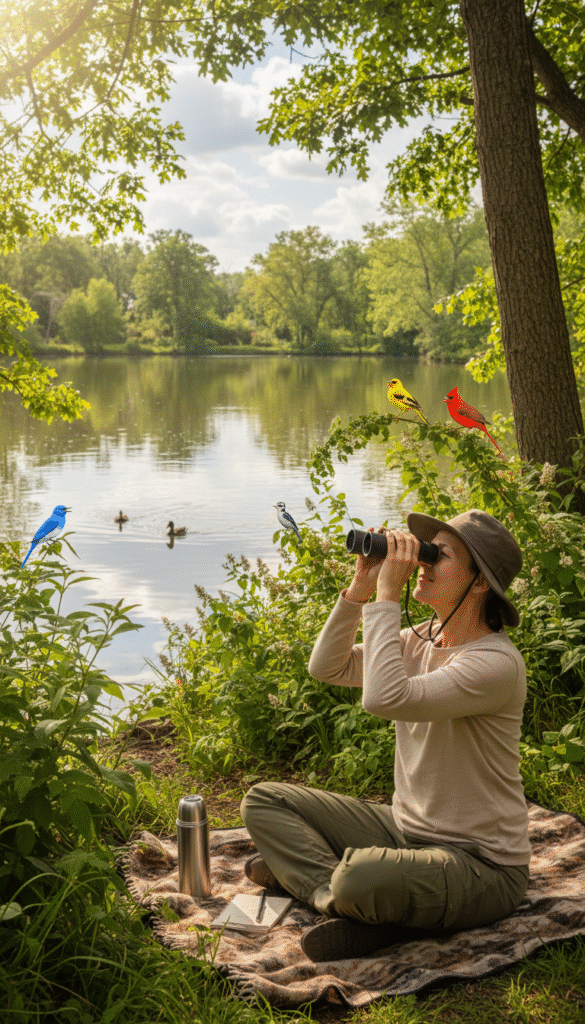
Attuning to Nature’s Calming Rhythms
This idea isn't new. Tuning your ear to a distant birdsong asks you to slow down. You sync with a pace far removed from buzzing deadlines.
That simple act can break a cycle of worried thoughts. It establishes a steady internal rhythm essential for mental health.
Natural Soundscapes and Sensory Connection
The call of a bird provides a perfect focal point. It’s a real-world sound that pulls your senses into the now.
This creates a tangible connection with the trees and the sky. By focusing on this detail, your attention shifts away from anxiety.
It grounds you during a hectic day, offering a deep sense of calm. This is the profound health benefit of the practice.
Birdwatching Therapy Benefits: Connecting with Nature for Mental Health
Scientific research now validates what many have felt intuitively: time spent in nature directly supports our mental health. A review in the International Journal of Environmental Research and Public Health confirms that exposure to green spaces lowers blood pressure and cortisol levels.
Doctors like Nooshin Razani, director of the Center for Nature and Health at UCSF Benioff Children’s Hospital, now prescribe park visits. This way helps people build resilience and reduce parental stress.
Mind-Body Wellness Through Observation
Watching birds in their habitat provides a meditative experience. It requires focus and pulls your attention into the present day, interrupting cycles of anxious thoughts.
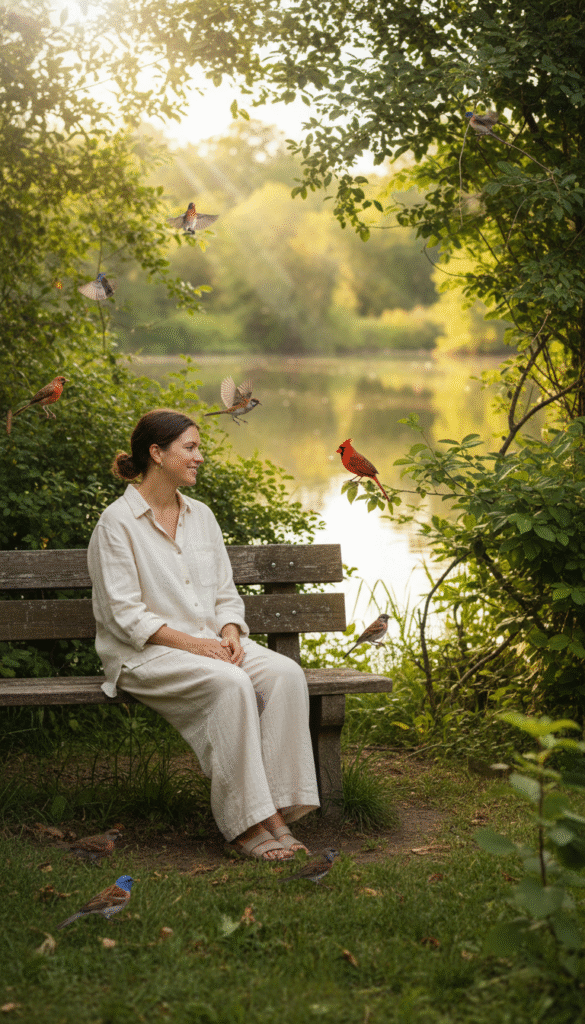
This practice of quiet observation can improve overall cognitive function. It also fosters a deep connection with the natural world, which has been shown to ease feelings of depression and anxiety.
Studies show this activity lowers blood pressure and boosts immune function. Over time, it cultivates a lasting sense of peace that supports emotional well-being.
Mindfulness in Action Through Birdwatching
For psychologist Elaine Lavin, the quiet pursuit of birding became a personal lifeline during the 2020 pandemic. It offered a necessary escape from isolation and stress.
This practice is a powerful form of active mindfulness. It turns observation into a tool for mental health.
Focusing on the Present Moment
Identifying a bird in the field demands your full attention. You must note its colors, behavior, and sound.
This deep focus leaves little room for swirling thoughts. It grounds you firmly in the now.
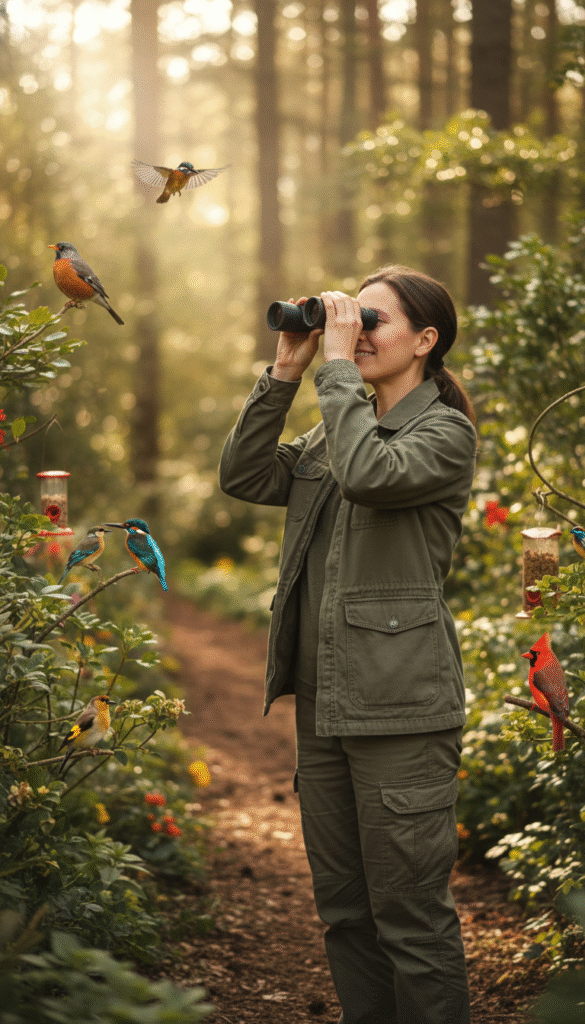
Interrupting Negative Thought Patterns
Lavin used birding outings to help veterans. She redirected their hypervigilance toward observing a local species.
This positive activity can disrupt cycles of anxiety and depression. It builds new relationships within the birding community.
Patients found genuine joy in this simple connection with nature. It fostered a lasting sense of peace.
| Mindfulness Technique | Primary Focus | Key Outcome |
|---|---|---|
| Birding | External observation & identification | Interrupts rumination, builds environmental connection |
| Meditation | Internal breath & bodily sensations | Calms nervous system, increases self-awareness |
| Walking in Nature | Rhythmic movement & sensory immersion | Reduces cortisol, improves mood and creativity |
Each way of engaging offers unique experiences. For many people, the birdwatching experience provides a perfect blend of focus and discovery that supports overall health.
Physical Activity and Gentle Exercise Outdoors
Eliza Minnucci, a Vermont teacher, saw firsthand how weekly forest trips built essential skills in her young students. Starting in 2013, her forest-day programs helped children develop fine motor control and a deep sense of place. This active connection with nature is a powerful model for all people seeking better mental health.
Walking and Movement in Natural Settings
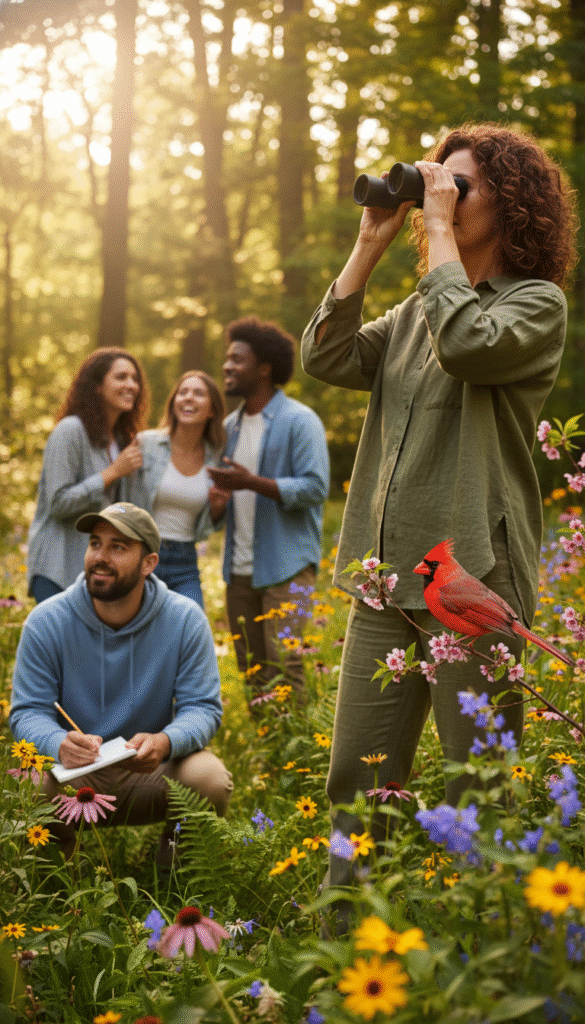
Regular physical activity, like walking to find a bird, is recommended by the CDC. It can reduce the risk of depression and anxiety. Moving through green spaces eases stiffness and helps clear your mind after a long day.
This combination of movement and observation supports a healthy lifestyle. You enjoy diverse species in your local area. Even simple outings provide the exercise needed to improve sleep and boost your mood.
The gentle practice of birding turns a walk into a focused experience. It directs your attention outward, away from daily stress. Over time, these experiences cultivate lasting joy and resilience.
Birdwatching as a Gateway to Social Connection
Unlike many social activities, birding offers a unique space where silence is not awkward but welcomed. This activity creates a natural bridge between people, built on a shared focus rather than forced dialogue.

Shared Experiences Without Forced Conversation
Standing quietly with others, watching a bird in its habitat, forges a powerful connection. There's no pressure for small talk. The shared experience of observing a species speaks for itself.
This way of interacting feels refreshing and genuine. It allows people to bond over a moment of collective discovery.
Building Community Through Quiet Companionship
Local birding groups and organized outings turn this quiet companionship into lasting relationships. The shared joy of spotting a rare bird in the field creates instant camaraderie.
These groups become a supportive network. They provide a consistent, low-pressure social outlet that can significantly ease daily stress.
For many, this community aspect is a vital part of their mental health strategy. It combines a love for nature with the human connection we all need.
Building Resilience and Cognitive Health with Birding
Beyond the immediate calm, regular time spent observing wildlife builds mental muscles that protect against life's pressures. This activity is a gentle workout for your brain, enhancing cognitive function and fostering long-term resilience.
This mental workout happens in two powerful ways.
Sharpening Attention Networks
The search-and-notice cycle of birding actively rewires your brain. Environmental psychologist Gregory Bratman confirms that contact with nature is essential for improving overall mental health and cognitive functioning.
Your attention constantly shifts from the fine details of a bird's feather to the wider landscape. This toggling focus trains your brain to switch gears more effectively in daily life.
It sharpens memory and concentration for other tasks, often without you even realizing it.
Cultivating Patience and Self-Compassion
Birding requires you to wait quietly. This practice cultivates a deep patience that translates beyond the field.
It helps people develop self-compassion and resilience during difficult or unpredictable seasons. Learning to be still with anticipation is a powerful skill.
The global value of these health benefits is immense. Research shows the mental health value provided by natural spaces like national parks is worth an estimated $6 trillion.
Together, sharpened focus and cultivated patience offer a profound way to build a healthier, more adaptable mind over time.
Accessible Birdwatching: No Cost, No Screens, Pure Peace
Across the United States, a growing movement is prescribing time outdoors as a legitimate health intervention. With 87 park prescription programs now active in 32 states, more people have access to nature-based activities that support their mental health.
Simple Tools and Techniques for Beginners
Carol Campbell of NHS Shetland notes that organizations create seasonal calendars to help residents engage. You do not need expensive gear to start. Simple observation of a bird in your backyard is enough to begin the practice.
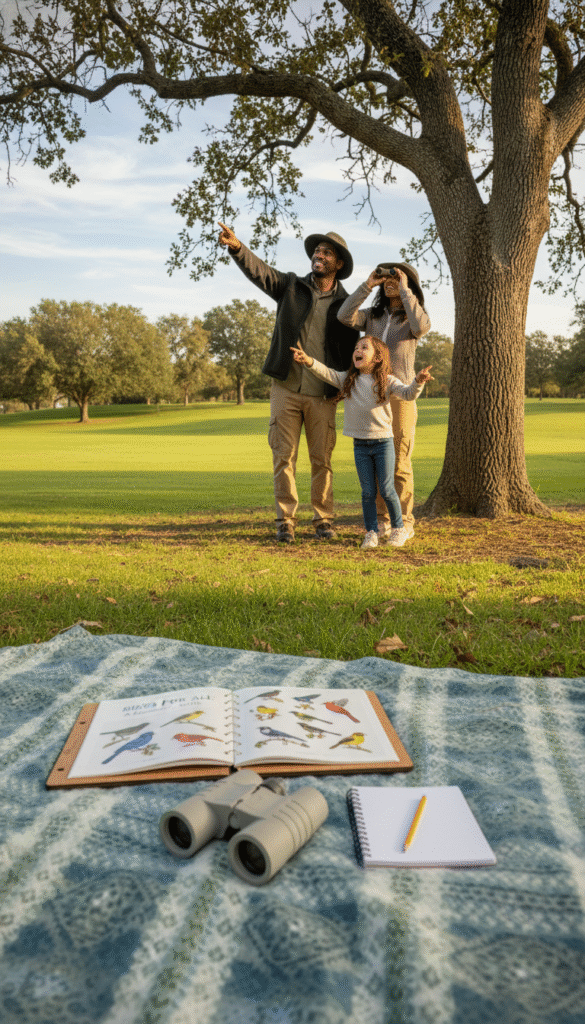
Stepping away from screens to watch birds provides a necessary break. This activity helps reduce stress and improves your overall mood. It offers a pure sense of peace without any cost.
| Tool | Best For | Key Advantage |
|---|---|---|
| Your Eyes & Ears | Immediate start | Zero cost, enhances sensory attention |
| A Basic Field Guide | Learning common species | Builds knowledge at your own pace |
| Free Bird ID App | Quick identification | Interactive and portable |
| Community Outings | Social learning | Shared experiences reduce anxiety |
Local health centers use birding to help patients manage depression. Accessible birding allows people of all abilities to enjoy the benefits of nature. It requires no travel or high costs, making it a sustainable way to find calm in daily life.
Integrating Birdwatching into Daily Life
You don't need a remote wilderness expedition to tap into the restorative calm of nature. The real benefits come from weaving this practice into the fabric of your regular day.
Micro-Outings and Daily Rituals
Think of a birding session as a brief reset. A ten-minute pause in your backyard counts.
This small investment of time shifts your attention from swirling thoughts to the behavior of a single bird. It’s a powerful way to manage daily stress.
Over weeks, these scattered moments build a steady rhythm. They foster a lasting sense of peace that supports your mental health.
Practical Tips for Urban and Backyard Birding
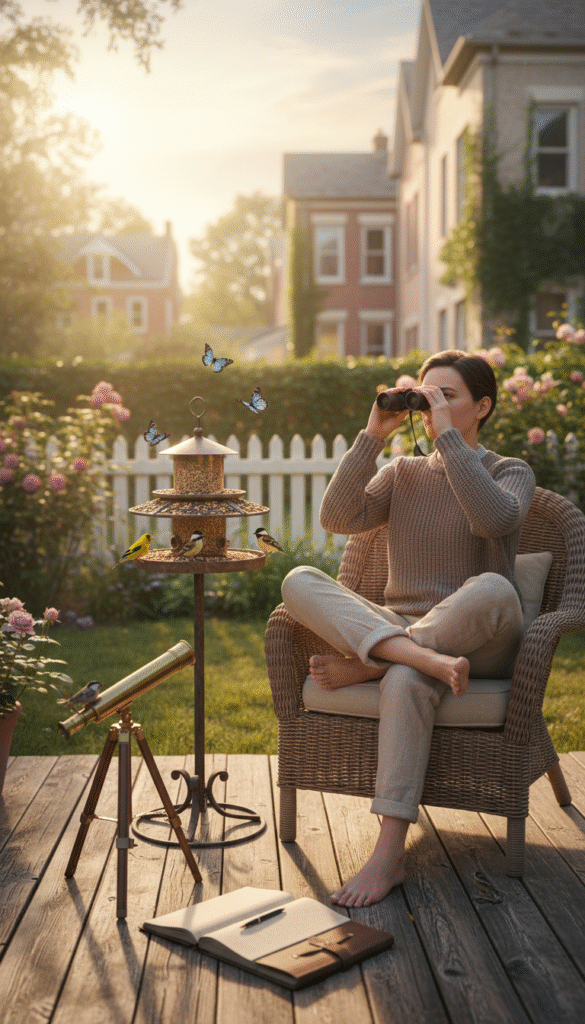
Start by simply noticing. Keep a pair of binoculars by a window you often pass.
Watch for regular visitors and their patterns. This simple activity creates a quiet connection right at home.
Local parks are also fantastic for short outings. Even in a city, green spaces host diverse species.
These consistent experiences add up. They turn a simple hobby into a cornerstone of your well-being.
This accessible birdwatching practice brings genuine joy and improves your overall mood. It’s a sustainable way to nurture your health within daily life.

The best therapy has no co-pay — and now it has a shirt.
If birdwatching is your therapy, you might as well wear the evidence. The "I'll Be in the Backyard Birdwatching" shirt says everything a birder needs to say. Comfort Colors, front-and-back design, ships fast from the US.
★★★★★ 5-star rated · Comfort Colors · Ships from the US
Conclusion
The simple act of looking up and noticing the life around us holds more power than we often realize. This accessible activity offers a direct path to supporting your mental health and easing daily stress.
By fostering a quiet connection with nature, the practice grounds your attention in the present. It cultivates a lasting sense of joy and peace.
Remember, while birdwatching provides wonderful benefits, it complements professional care. For serious concerns, always seek help from a qualified expert.
If you're in crisis, contact the 988 Suicide and Crisis Lifeline. It offers immediate support from a trained counselor.
Start your journey today. Step outside, listen for a bird's call, and appreciate the beauty birds bring to our life. It's a simple, powerful way to invest in your health.
Enjoyed this post? Browse our Etsy shop!
Bird shirts, mugs & faith apparel · 122+ designs · ★★★★★ 5.0


0 Comments