A recent visit to my childhood home offered an unexpected lesson. My parents, equipped with binoculars and guidebooks, invited me to join their favorite pastime.
☕ The Perfect Mug for Every Bird Lover
Start your morning right with a bird-themed mug that makes you smile.
🛒 Shop Bird Lover Mugs on Etsy


I’ll admit, I initially felt a bit self-conscious. The activity seemed like a niche hobby. Yet, I decided to give their world a closer look.
My dad pointed out an Eastern towhee hidden in the brush. He identified it not by sight, but by sound. Its distinctive song, which he described as "drink your teeeeea," lasted just a second.
In that quiet moment, my perspective shifted. Observing these intricate creatures became more than a hobby. It felt like a quiet form of meditation.
Taking one day to simply be present changed my outlook. The constant anxiety about life, work, and even daily food, began to soften. I found a strange contentment in the pause.
My father’s deep knowledge showed me the way. The time we invest in noticing creation shapes how we see everything.
My body and mind felt a release from the rush. This simple practice offered a profound reminder to trust during seasons of waiting.
Key Takeaways
- Simple observation in nature can become a meaningful spiritual practice.
- Expertise, like identifying a bird by its song, comes from dedicated time and attention.
- Slowing down for even a single day can alleviate anxiety and foster contentment.
- Our perspective on the world is directly shaped by what we choose to focus on.
- Engaging with creation provides necessary rest for both the body and the soul.
- Personal hobbies, even seemingly simple ones, can hold deep, life-shaping lessons.
- Finding peace often starts with being present in the current moment.
Finding Faith in the Care of Creation
Love Birds? Shop Our Etsy Store!
Faith-filled bird shirts, mugs & gifts — beautifully printed & shipped fast. 122+ designs, 5-star rated.
🛒 Shop YourBirdBuddyShop on EtsyThe teachings of Jesus in the Gospel of Matthew offer a profound antidote to modern anxiety. His words invite us to look birds air and see a model of serene dependence.
In Matthew 6:25-26, he directs our attention to these creatures. They do not sow reap or store away barns. Yet, the heavenly father feeds them faithfully.
Reflecting on Matthew 6:25-26 and Biblical Teachings
This passage isn't just about avoiding worry. It's a call to recognize our immense worth. Jesus asks, "Are you not much more valuable?"
Theologian Augustine of Hippo saw the Sermon on the Mount as a perfect standard for living. It redirects our focus from scarcity to divine provision.
Biblical scholar Tim Mackie adds that Jesus viewed creation as packed with opportunity. The father provides for all his creatures with abundance.
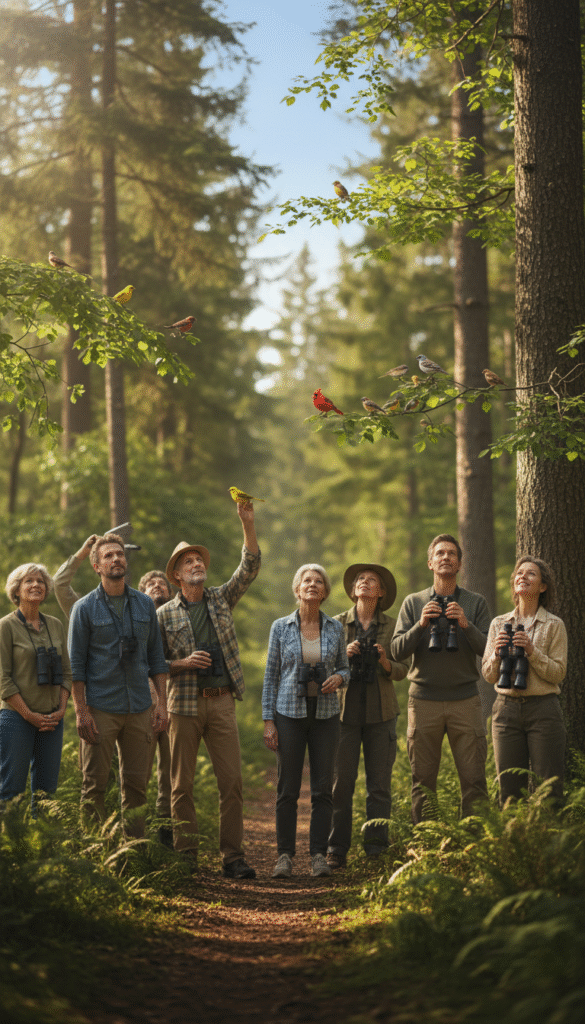 cardinals, and sparrows, are seen flitting about, adding life and color to the scene. The background features a soft focus of towering trees and a clear blue sky, creating an atmosphere of tranquility and connection with nature. The lighting is warm and inviting, evoking a sense of hope and faith in the beauty of creation." title="A serene outdoor scene depicting a lush green forest with sunlight filtering through the leaves, casting gentle dappled shadows on the ground. In the foreground, a diverse group of people in modest casual clothing, including men and women of different ages, are engaged in birdwatching, their expressions reflective and peaceful as they observe colorful birds perched on branches nearby. In the middle ground, various bird species, such as vibrant warblers, cardinals, and sparrows, are seen flitting about, adding life and color to the scene. The background features a soft focus of towering trees and a clear blue sky, creating an atmosphere of tranquility and connection with nature. The lighting is warm and inviting, evoking a sense of hope and faith in the beauty of creation." width="585" height="1024" class="aligncenter size-large wp-image-2389" srcset="https://yourbirdbuddy.com/wp-content/uploads/2026/04/A-serene-outdoor-scene-depicting-a-lush-green-forest-with-sunlight-filtering-through-the-leaves-585x1024.png 585w, https://yourbirdbuddy.com/wp-content/uploads/2026/04/A-serene-outdoor-scene-depicting-a-lush-green-forest-with-sunlight-filtering-through-the-leaves-171x300.png 171w, https://yourbirdbuddy.com/wp-content/uploads/2026/04/A-serene-outdoor-scene-depicting-a-lush-green-forest-with-sunlight-filtering-through-the-leaves.png 768w" sizes="auto, (max-width: 585px) 100vw, 585px" />
Observing Nature’s Unspoken Testimony of Trust
When we truly look birds in their daily routine, a lesson unfolds. They don't fret about their life, food, or body.
Their simple existence is a quiet witness. It takes time to move from a glance to a deep beholding of the birds air.
This observation teaches a new way to be content. We learn to trust that the one who cares for them will also care for us.
Embracing "watching birds trusting God" in a Season of Waiting
The account of an author witnessing a trapped avian creature provided unexpected insight during my own difficult wait.
Personal Story: Moments of Uncertainty and Revelations in Nature
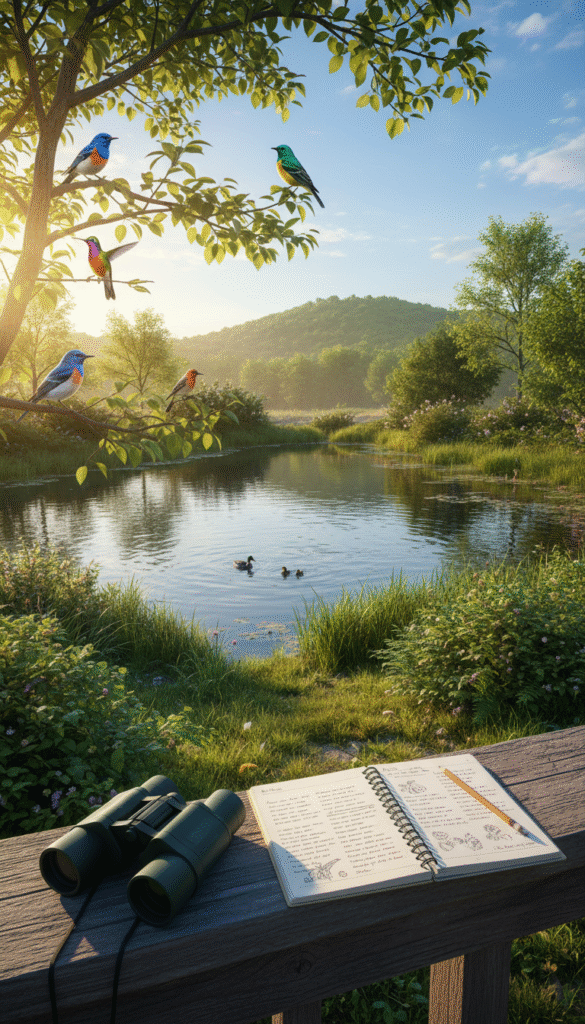
Betsy St. Amant Haddox shared her experience finding a bird stuck in a garden feeder. This story struck me deeply during my own season of feeling confined.
I saw my anxiety mirrored in that creature's struggle. My frantic attempts to manage my life felt just as ineffective.
It required significant time to understand that my way of controlling outcomes was flawed. Simple reliance offered better results.
The gardener's intervention to free the bird became a clear metaphor. I needed my heavenly father to do the same for me.
This practice of "watching birds trusting God" reshaped my outlook. Every feathered visitor reminded me that the father is constantly at work.
Waiting transformed from a passive state to an active opportunity. It became a chance to depend on divine goodness.
Bird Watching as a Spiritual Practice and Mental Refreshment
From world leaders to celebrated artists, the act of looking to the air has provided solace and inspiration. This simple discipline transcends being a mere hobby. It becomes a portal to mental clarity and spiritual grounding.
Nurturing a Faith-Filled Perspective Amidst Anxiety
Laurel Moffatt reflects that this practice restores attention and eases anxiety for anyone. When we look birds air, we see they do not sow reap or store away barns. Yet the heavenly father feeds them faithfully.
This observation directly challenges our worry. It invites a faith-filled perspective. We are reminded that we are much valuable than these creatures.
Discovering the Therapeutic Benefits of Nature’s Voice
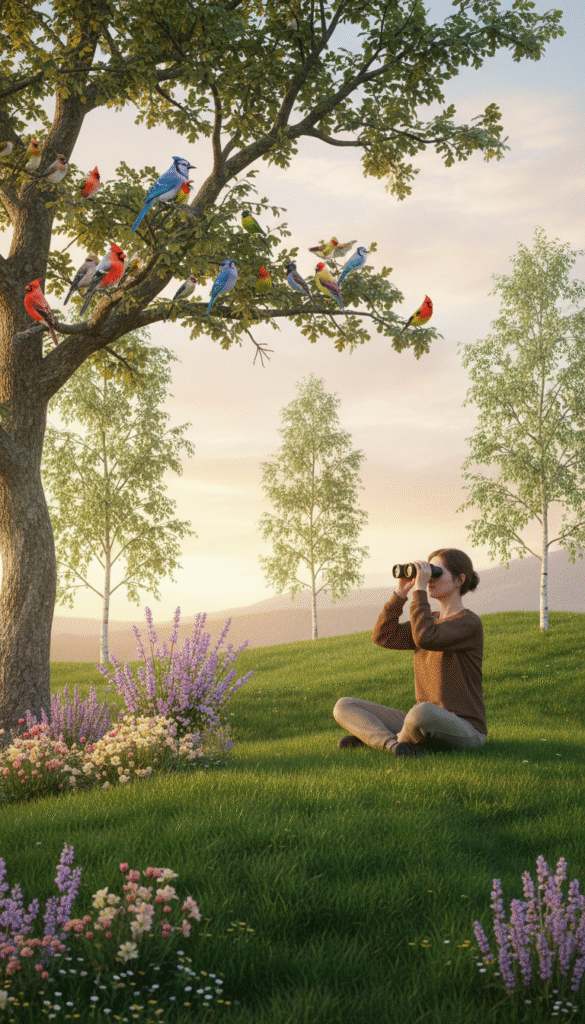
Figures like President Jimmy Carter and theologian John Stott found mental refreshment here. Science agrees. Time in nature alleviates stress, which is why we are encouraged to look birds and consider their life.
Even in a city, one can spot a bird and reflect. The heavenly father feeds them without need to store away. This truth soothes our body and mind.
The practice helps us realize we are meant to be content. By taking time to observe, we find a way to peace that lasts the day. It's a new way of seeing the world as a place of provision.
Conclusion
Ultimately, the lessons from nature's small messengers are timeless and deeply personal. This perspective shift is a powerful antidote to anxiety.
By remembering that birds do not sow reap or store away barns, we learn to trust. Our needs are met by a faithful provider.
It is vital to take time to look birds in the eye. See the beauty of the air and the world around you.
Whether in a season of waiting or a time of plenty, this truth remains. You are valued far more than the creatures that soar without fret.
I encourage you to step outside today, find a bird, and reflect on the abundance present in your own journey.
May you find peace in this knowing.
Enjoyed this post? Browse our Etsy shop!
Bird shirts, mugs & faith apparel · 122+ designs · ★★★★★ 5.0

0 Comments