There’s a special kind of magic in watching tiny, iridescent birds zip through the air. Their buzzing wings and sudden, graceful stops at a blossom bring instant joy. For many of us, these moments become a cherished part of connecting with nature right outside our window.
💐 Shop Our Hummingbird Shirts
Comfortable, meaningful shirts for hummingbird lovers, families, and everyday wear.
🛒 Shop Hummingbird Shirts on Etsy
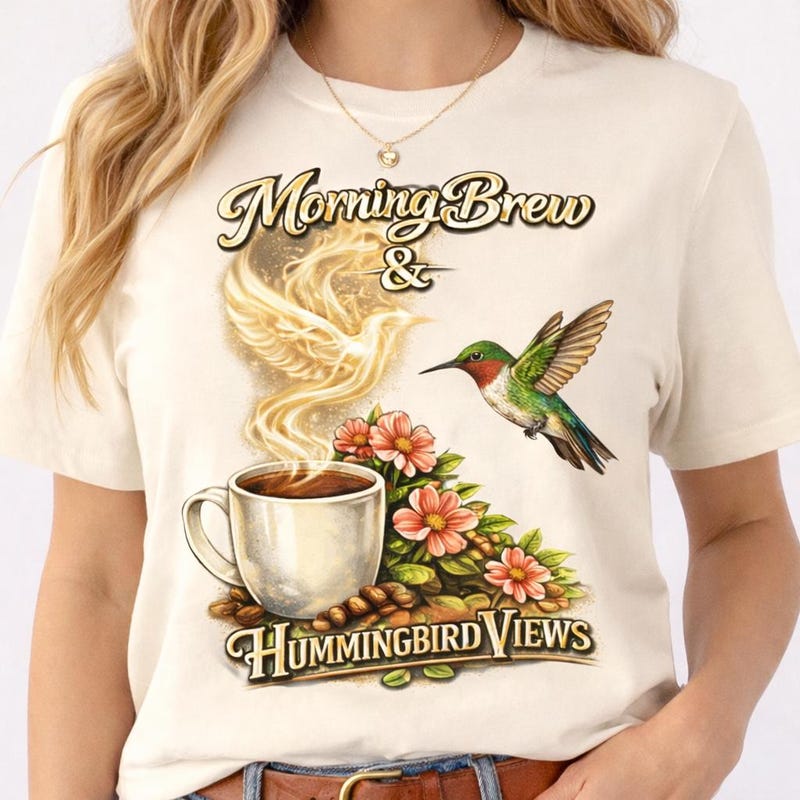


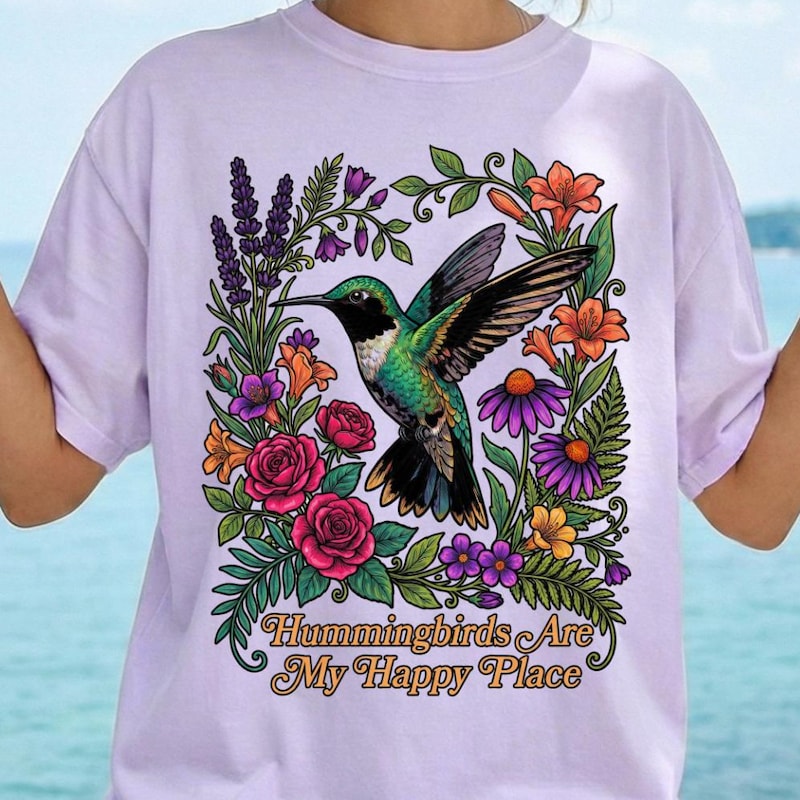

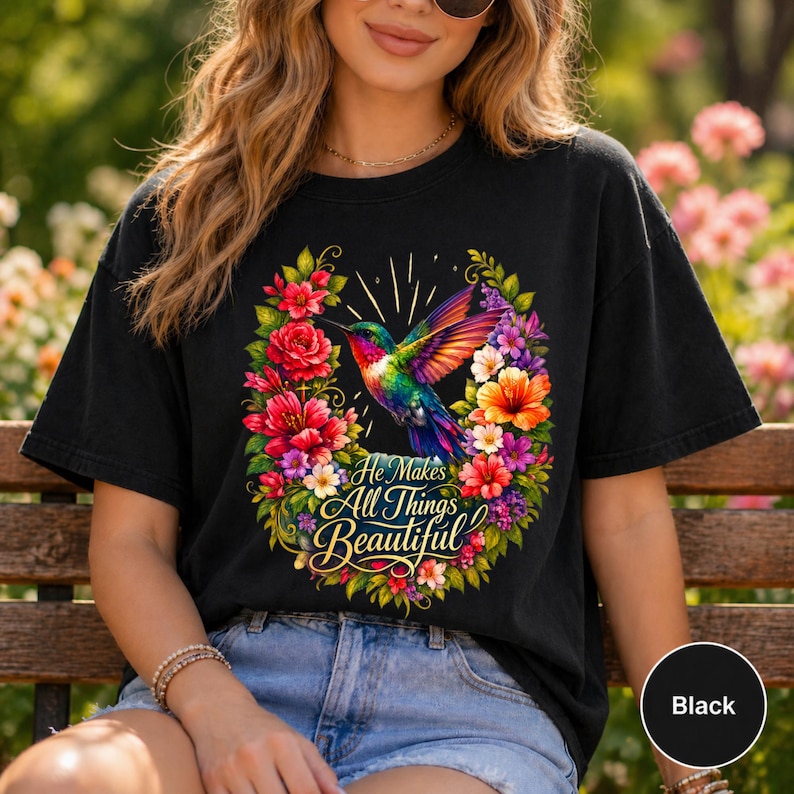
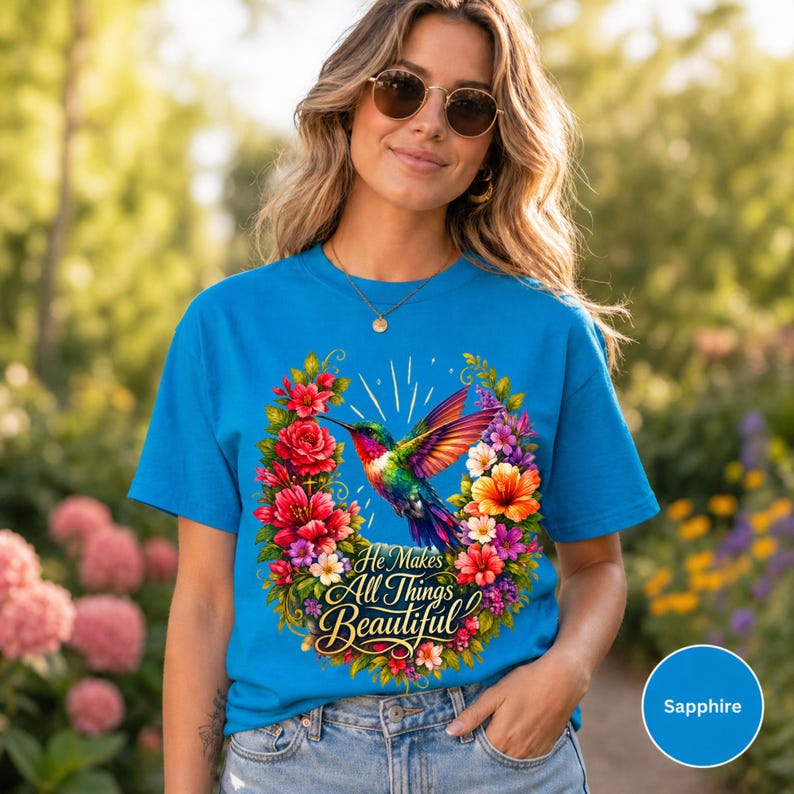
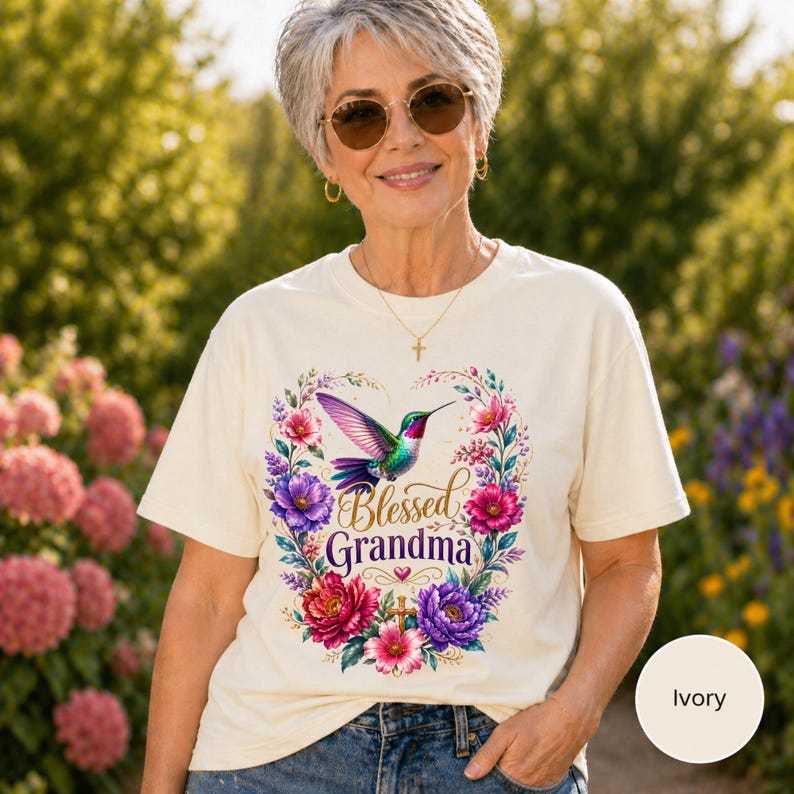
Blessed Grandma Shirt
These incredible creatures live life at full speed. To fuel their supercharged metabolism, they must visit nectar sources every 10 to 15 minutes all day long. Some species, like the Rufous Hummingbird, undertake epic journeys, completing the longest migration for their body size in the avian world.
Their world is changing, though. Shifts in climate patterns are affecting their traditional migration routes and the availability of crucial habitat. This makes the resources we provide in our own spaces more important than ever.
Transforming a part of your garden into a supportive oasis is a rewarding step you can take. It ensures these travelers find the high-energy food and safe haven they need, especially during critical times like spring migration. You'll be directly supporting local bird populations while gaining a front-row seat to nature's most energetic aerial show.
Key Takeaways
- Creating a supportive garden space allows you to enjoy the daily aerial displays of fascinating tiny birds.
- These birds have extremely high energy needs, requiring frequent visits to nectar-rich flowers.
- Providing native plants, clean water, and reliable food sources is a vital step in supporting their survival.
- Some species are known for remarkable long-distance migrations that are impacted by environmental changes.
- Your efforts can help counter habitat loss and offer a crucial rest stop during strenuous seasonal journeys.
- Observing these dynamic creatures is a simple and deeply rewarding way to connect with the natural world.
Understanding Hummingbird Behavior and Habitat
Love Birds? Shop Our Etsy Store!
Faith-filled bird shirts, mugs & gifts — beautifully printed & shipped fast. 122+ designs, 5-star rated.
🛒 Shop YourBirdBuddyShop on EtsyData from citizen science projects sheds light on the intricate relationship between these birds and their preferred plants. For example, Audubon’s Hummingbirds at Home program, which ran from 2013 to 2021, tracked feeding habits. It identified 21 different species and a stunning 371 blooming plant species.
This research helps us understand their core needs. To build a supportive space, you must know their routines.
Feeding Patterns and Migration Insights
These energetic creatures have immense appetites. They may visit between 1,000 and 2,000 flowers daily. This makes a steady supply of nectar absolutely essential.
Their movements are timed with the seasons. Many hummingbirds migrate in the fall. Keeping food sources available longer supports their journey.
Observing feeding times can also show how climate shifts affect their spring arrival in your area.
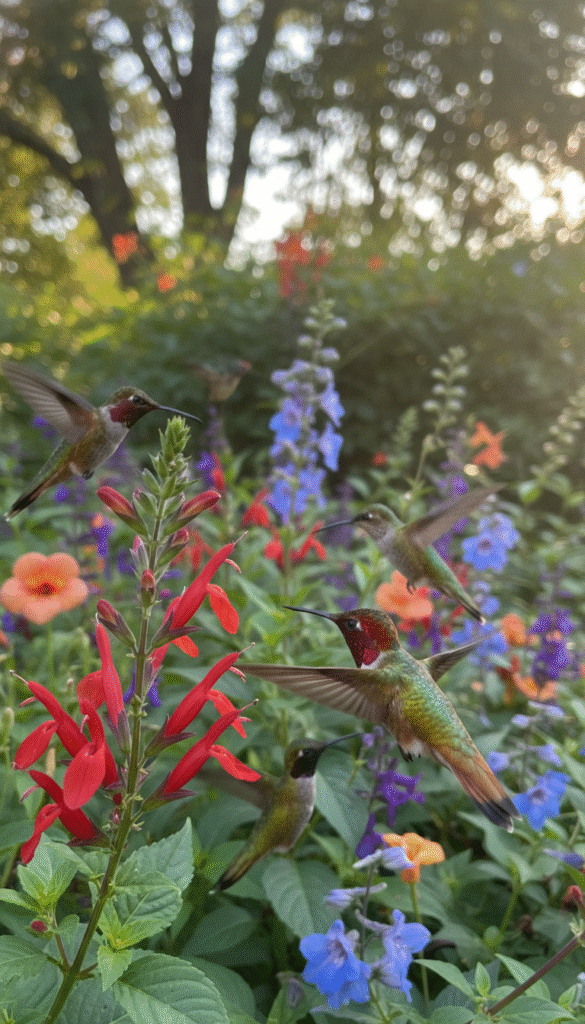
Natural Habitat Requirements
A healthy habitat is more than just flowers. These birds need a mix of trees, shrubs, and open areas for successful nesting. This variety provides protective cover.
Native plants are a key step. They support a greater concentration of insects than non-native ornamentals. Insects are a vital protein source, especially for growing chicks.
You should avoid using pesticides in your yard. These chemicals eliminate the very insects that are a crucial part of their diet.
| Habitat Component | Primary Purpose | Key Consideration |
|---|---|---|
| Nectar-Rich Flowers | Provides high-energy food | Choose tubular shapes; ensure blooms throughout the year |
| Insect Populations | Supplies essential protein | Plant native species; avoid chemical pesticides |
| Water Sources | Offers drinking and bathing | Use misters or shallow drippers for easy access |
| Shelter & Nesting Sites | Provides safety and breeding space | Include dense shrubs and small trees with branching cover |
Selecting Native Plants and Nourishing Nectar Sources
Expert banders like Sandy Lockerman emphasize native plants as the cornerstone of a healthy habitat. Her work with thousands of hummingbirds shows that species like bee balm and trumpet honeysuckle offer a superior nectar supply.
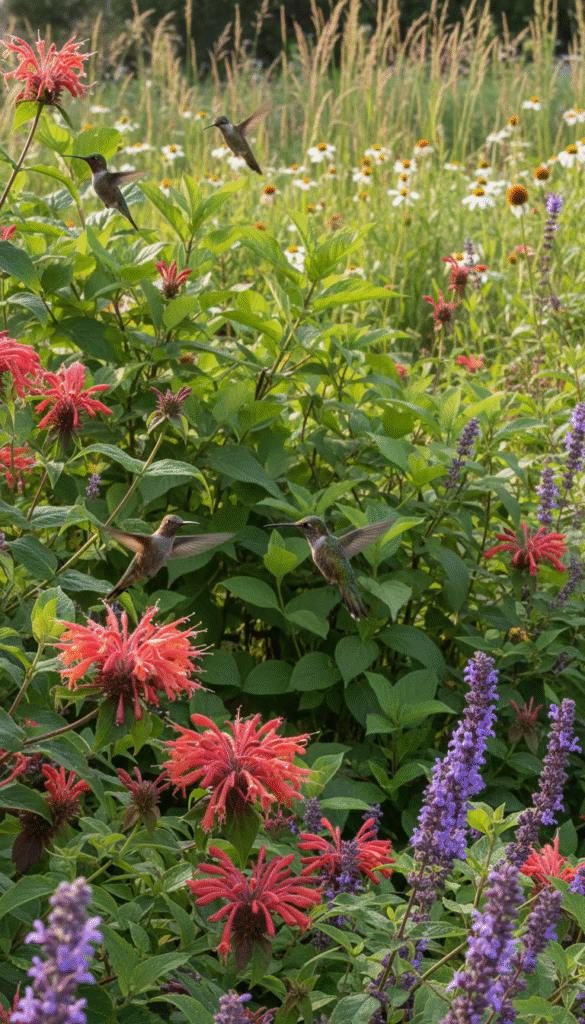
Choosing Tubular Flowers and Year-Round Bloomers
Focus on tubular flowers that match their long bills. Plant a variety that blooms from spring through fall. This ensures a constant food source.
Grouping these plants together creates dense, attractive patches. It supports the growth of tiny insects, a vital protein supply.
Integrating Shrubs, Vines, and Trees
Incorporate shrubs and small trees. They provide essential perches for resting and scouting. A thin branch or a wire swing near your flowers works perfectly.
Place these features at a safe distance—about 15 feet from larger trees and 6 feet from your house. This simple step helps prevent window strikes.
Always avoid using pesticides. Chemicals can seep into plant nectar and harm the birds. Your chemical-free yard becomes a safe haven.
Creating a hummingbird backyard sanctuary
Providing supplemental nectar through feeders is a simple yet powerful step to support their high-energy lifestyle. This reliable food source perfectly complements the natural flowers in your garden.
Setting Up Feeders with Proper Sugar-Water Recipes
The ideal homemade mix mimics natural plant sugars. Always use a ratio of four parts water to one part white sugar. Never add red dye, honey, or artificial sweeteners, as these can harm the birds.
You must clean feeders every two to three days. This routine prevents mold growth and fermentation, especially in summer heat. Fresh sugar water keeps your tiny visitors healthy.
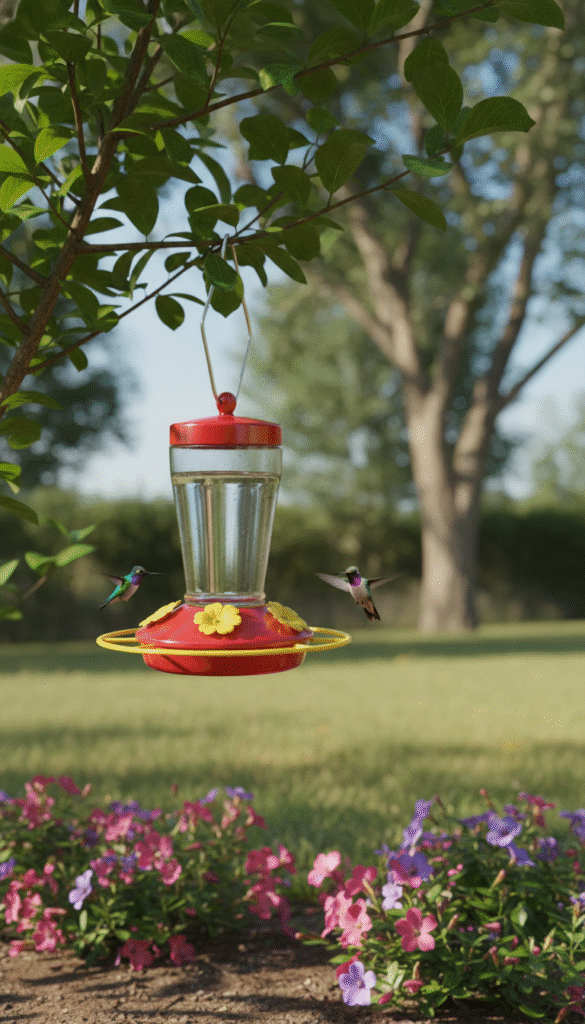
Effective Placement for Maximum Attraction
Hang feeders at least five feet off the ground. This height helps protect birds from predators during feeding. Keep a safe distance from dense shrubs where cats may hide.
Timing is crucial for migratory species. Place feeders outside about two weeks before the first spring arrivals. Leave them up for two weeks after the last fall sighting to support travelers.
Position feeders near your native plants. This mimics a natural environment and attracts more hummingbirds. Using multiple feeders in different places can reduce territorial disputes.
Enhancing Your Sanctuary with Perches, Water Features, and Safe Zones
Beyond nectar, these tiny aviators need water for bathing and secure perches for scouting and preening. Adding these elements creates a more complete and supportive habitat in your yard.
Installing Misters, Fountains, and Drippers
Misters are a fantastic step because hummingbirds love to fly through the fine spray. A shallow bath with rocks and a bubbler offers moving water.
You should clean all water sources every few weeks. This prevents harmful bacteria and keeps the area safe.
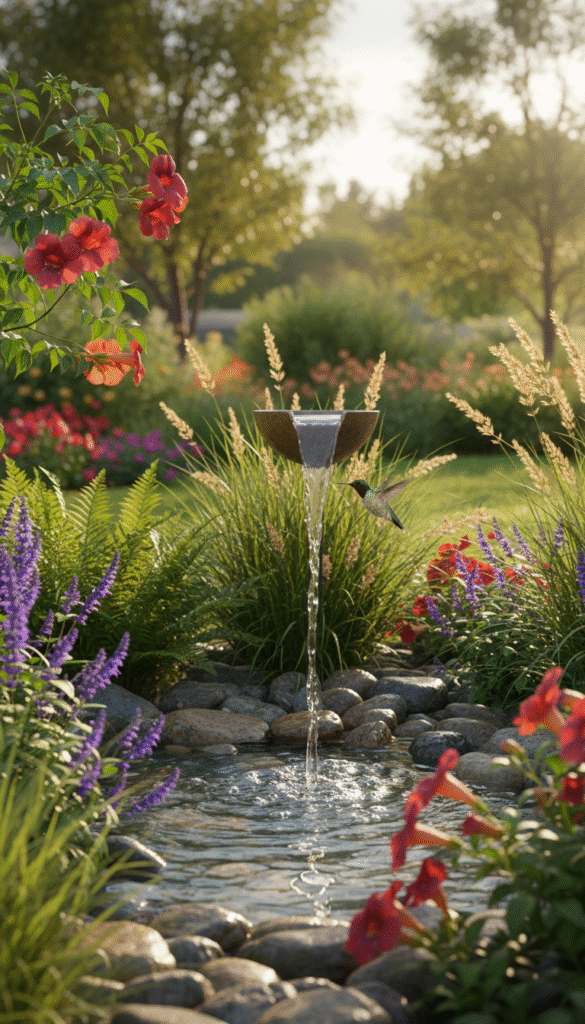
Providing a variety ensures every visiting bird finds a suitable spot. Different species may prefer different sources.
| Water Feature Type | Primary Attraction | Key Maintenance Tip |
|---|---|---|
| Mister or Dripper | Flying through fine spray; drinking | Check for clogs weekly; use clean water |
| Fountain with Bubbler | Bathing in shallow, moving water | Scrub basin to prevent algae growth |
| Shallow Birdbath | Perching to drink and bathe | Refresh water daily; add stones for footing |
Providing Secure Perches and Nesting Spots
These birds build tiny, expandable nests using lichens and spider webs. They often choose horizontal limbs on trees and dense shrubs.
Maintaining these plants offers safe nesting areas. Perches near water features let them preen after bathing.
Always avoid pesticides. They eliminate the insects that are a crucial food source for young in the nest.
If a bird becomes trapped, gently use a broom to guide it out. This simple action can save a life.
Conclusion
Your journey to support these vibrant flyers culminates in a garden alive with activity and color. Creating a supportive space is a deeply rewarding step that brings joy year after season.
By offering a steady supply of nectar, fresh water, and native plants, you ensure your yard remains a vital habitat for local species. Regular maintenance of your feeders and flowers over time encourages repeat visits.
Every small effort, from planting a single flower to installing a feeder, contributes to the health of the bird population. With patience, your outdoor area transforms into a peaceful oasis for daily observation.
These energetic hummingbirds will thrive throughout the growing season, thanks to your dedication.
Enjoyed this post? Browse our Etsy shop!
Bird shirts, mugs & faith apparel · 122+ designs · ★★★★★ 5.0

0 Comments