One of the most rewarding parts of backyard birding is discovering which birds naturally belong to your region — and then creating the perfect habitat to welcome them. Whether you live in the lush Pacific Northwest, the sun-drenched Southwest, the rolling Midwest prairies, or the humid Southeast, the birds visiting your yard will be uniquely shaped by your local ecosystem. This guide breaks down the best birds to attract by region, along with the specific foods, plants, and feeders that will bring them right to your window.
Why Your Region Matters More Than You Think
Bird species are not distributed randomly across North America. Migration routes, climate, native plant communities, and habitat types all determine which birds are present in your area at any given time. A Baltimore Oriole is a summer staple in the Midwest but rarely seen in the Southwest. A Cactus Wren thrives in Arizona’s desert scrub but would never survive a Minnesota winter. Understanding your region is the single most effective thing you can do to attract more birds — and more variety — to your backyard.
The good news is that with the right setup, almost any yard can become a thriving bird habitat. Even a small urban balcony with a single feeder and a pot of native flowers can attract a surprising number of species. The key is matching your offerings to what the birds in your area are already looking for.
Northeast & Mid-Atlantic (Maine to Virginia)
Love Birds? Shop Our Etsy Store!
Faith-filled bird shirts, mugs & gifts — beautifully printed & shipped fast. 122+ designs, 5-star rated.
🛒 Shop YourBirdBuddyShop on Etsy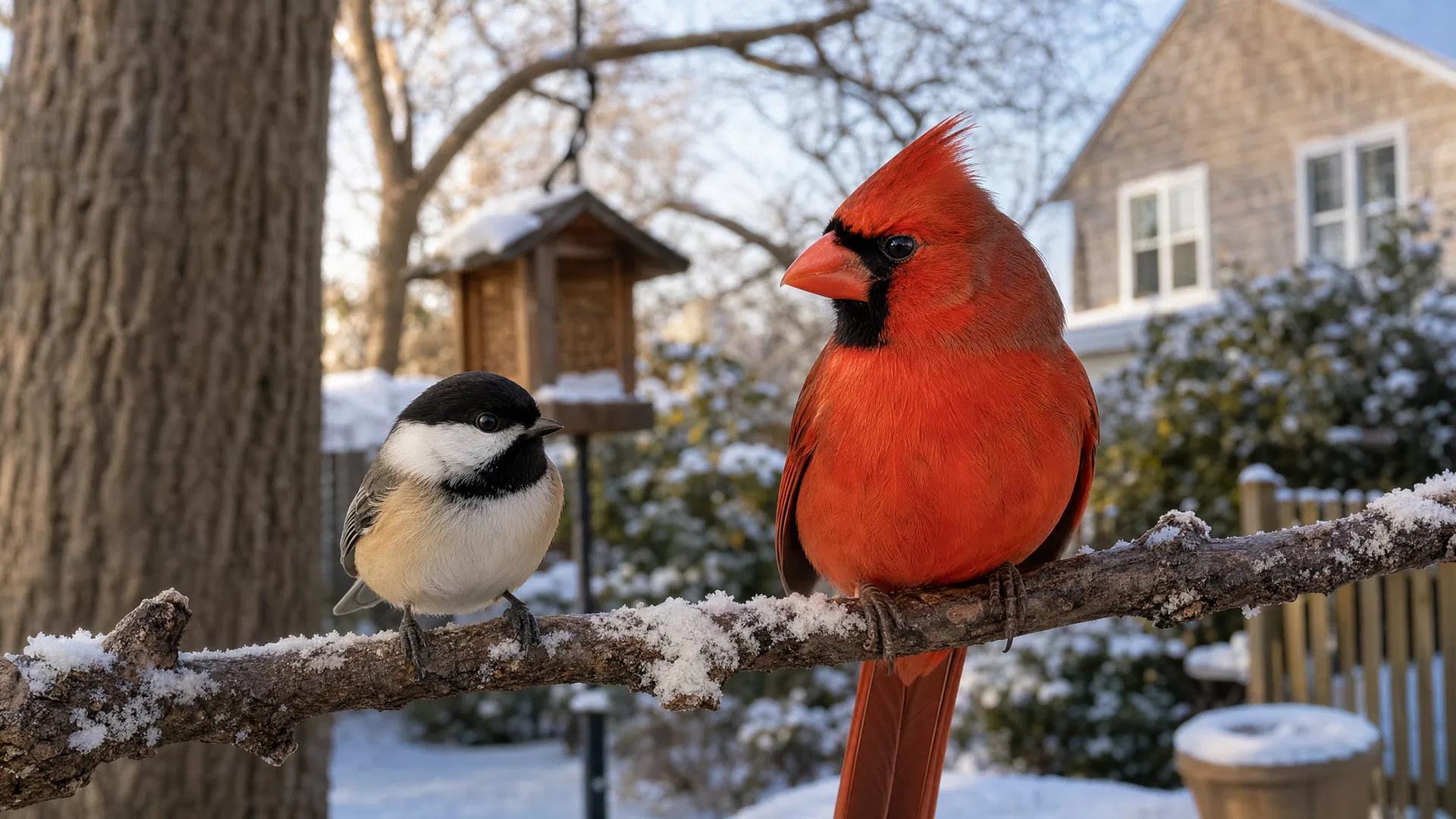
The Northeast is home to a rich mix of year-round residents and seasonal migrants. Dense deciduous forests, coastal wetlands, and suburban green spaces create diverse habitats that support dozens of species. The region’s cold winters make supplemental feeding especially impactful — birds that might otherwise forage widely will reliably return to a well-stocked feeder when natural food is scarce.
Top Birds to Attract in the Northeast
| Bird | Best Food | Feeder Type | Season |
|---|---|---|---|
| Black-capped Chickadee | Black oil sunflower seeds | Tube or hopper feeder | Year-round |
| Northern Cardinal | Safflower & sunflower seeds | Platform or hopper feeder | Year-round |
| Downy Woodpecker | Suet & peanuts | Suet cage | Year-round |
| Baltimore Oriole | Grape jelly & orange halves | Oriole feeder | Spring–Fall |
| Ruby-throated Hummingbird | Nectar (4:1 water to sugar) | Hummingbird feeder | May–September |
To attract Black-capped Chickadees, plant native shrubs like serviceberry and elderberry — they love foraging for insects in dense foliage. For Northern Cardinals, dense shrubs and brush piles provide the shelter they need to feel safe. Baltimore Orioles arrive in May and are best attracted with fresh orange halves and grape jelly placed in an open feeder at eye level.
Southeast (Florida to Tennessee)
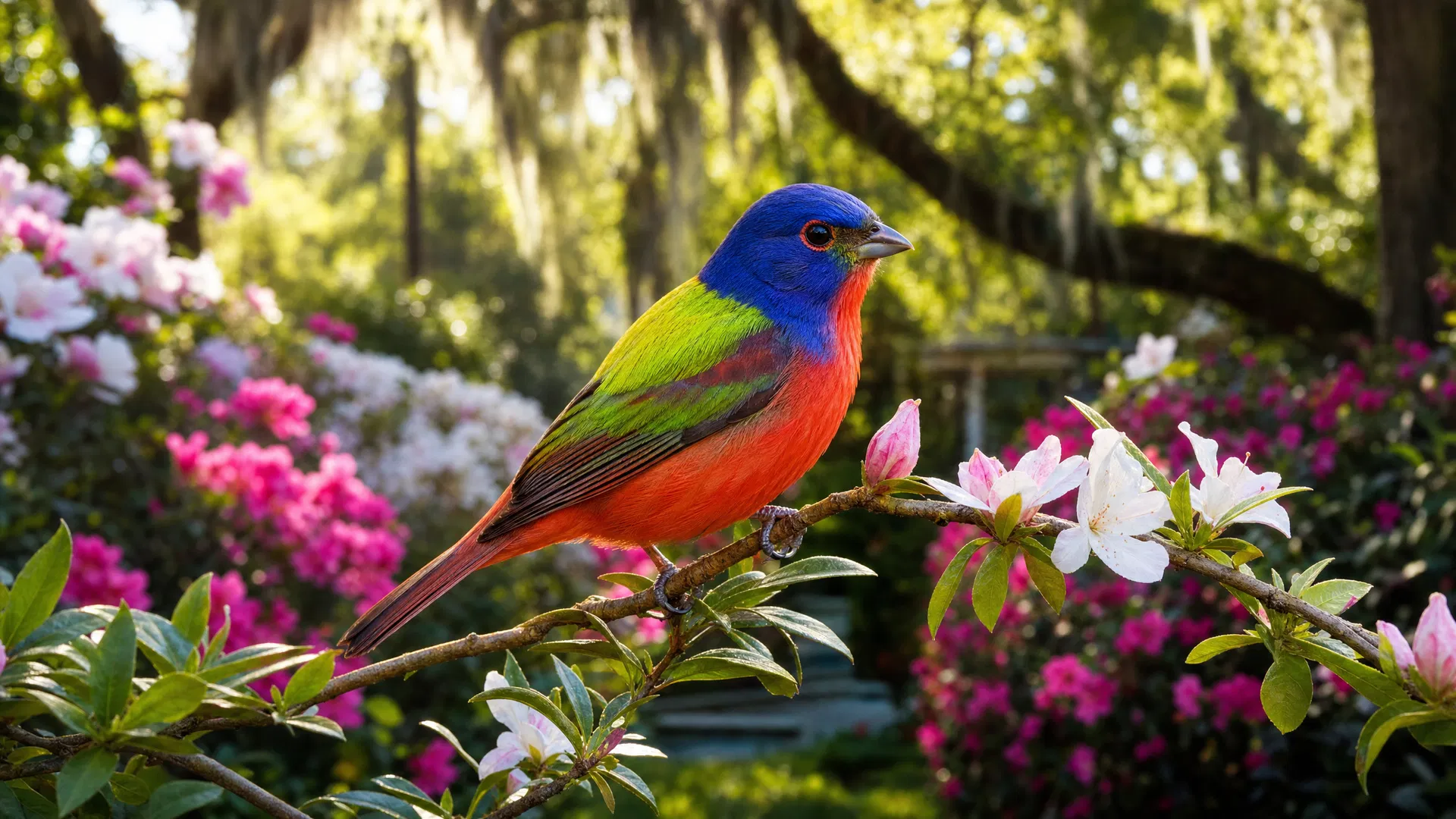
The Southeast boasts some of the highest bird diversity in North America, thanks to its mild winters, extensive wetlands, and subtropical habitats in Florida. Year-round warmth means many species that migrate elsewhere stay put in the South, and the region also serves as a critical wintering ground for birds from farther north.
Top Birds to Attract in the Southeast
| Bird | Best Food | Feeder Type | Season |
|---|---|---|---|
| Northern Mockingbird | Berries, mealworms | Platform feeder | Year-round |
| Carolina Wren | Suet & mealworms | Suet cage or platform | Year-round |
| Eastern Bluebird | Mealworms | Open platform or bluebird feeder | Year-round |
| Ruby-throated Hummingbird | Nectar | Hummingbird feeder | Year-round (FL), Spring–Fall elsewhere |
| Painted Bunting | White millet | Tube feeder | Spring–Summer |
The Painted Bunting — arguably the most colorful bird in North America — visits the Southeast during spring and summer and is irresistibly drawn to white millet in a tube feeder. Eastern Bluebirds are cavity nesters, so installing a nest box on a fence post or tree at the edge of an open lawn dramatically increases your chances of hosting a nesting pair. Carolina Wrens are bold and curious; they’ll investigate any brush pile or dense shrub you create near the feeder area.
Midwest & Great Plains (Ohio to Kansas)
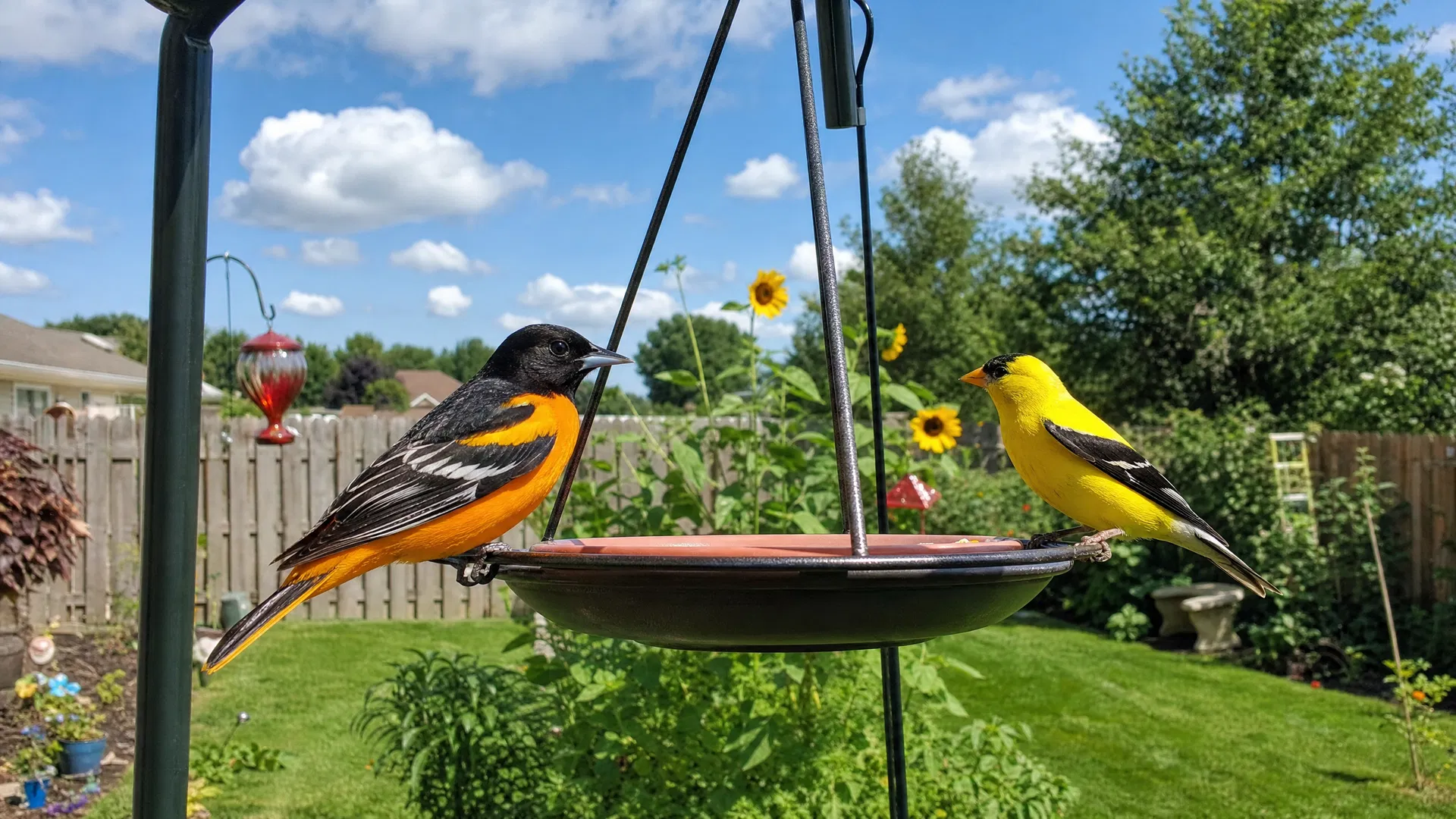
The Midwest’s open grasslands, farm fields, and woodland edges create a distinctive bird community dominated by ground-feeding sparrows, open-country raptors, and grassland songbirds. The region also sits along major migration corridors, making spring and fall exceptional times for spotting rare and transient species at backyard feeders.
Top Birds to Attract in the Midwest
| Bird | Best Food | Feeder Type | Season |
|---|---|---|---|
| American Goldfinch | Nyjer (thistle) seed | Finch sock or tube feeder | Year-round |
| Rose-breasted Grosbeak | Sunflower seeds | Hopper or platform feeder | Spring–Fall |
| Indigo Bunting | White millet & nyjer | Tube feeder | Spring–Summer |
| Baltimore Oriole | Grape jelly & orange halves | Oriole feeder | May–August |
| Dark-eyed Junco | White millet & sunflower chips | Ground or platform feeder | Fall–Spring |
American Goldfinches are year-round Midwest residents and will flock to a nyjer feeder in impressive numbers during winter. Plant native coneflowers (Echinacea) and black-eyed Susans — goldfinches love to cling to the seed heads in late summer. The electric-blue Indigo Bunting is a summer visitor that prefers brushy woodland edges; planting native shrubs along a fence line creates ideal habitat.
Southwest & Desert (Arizona, New Mexico, Nevada)
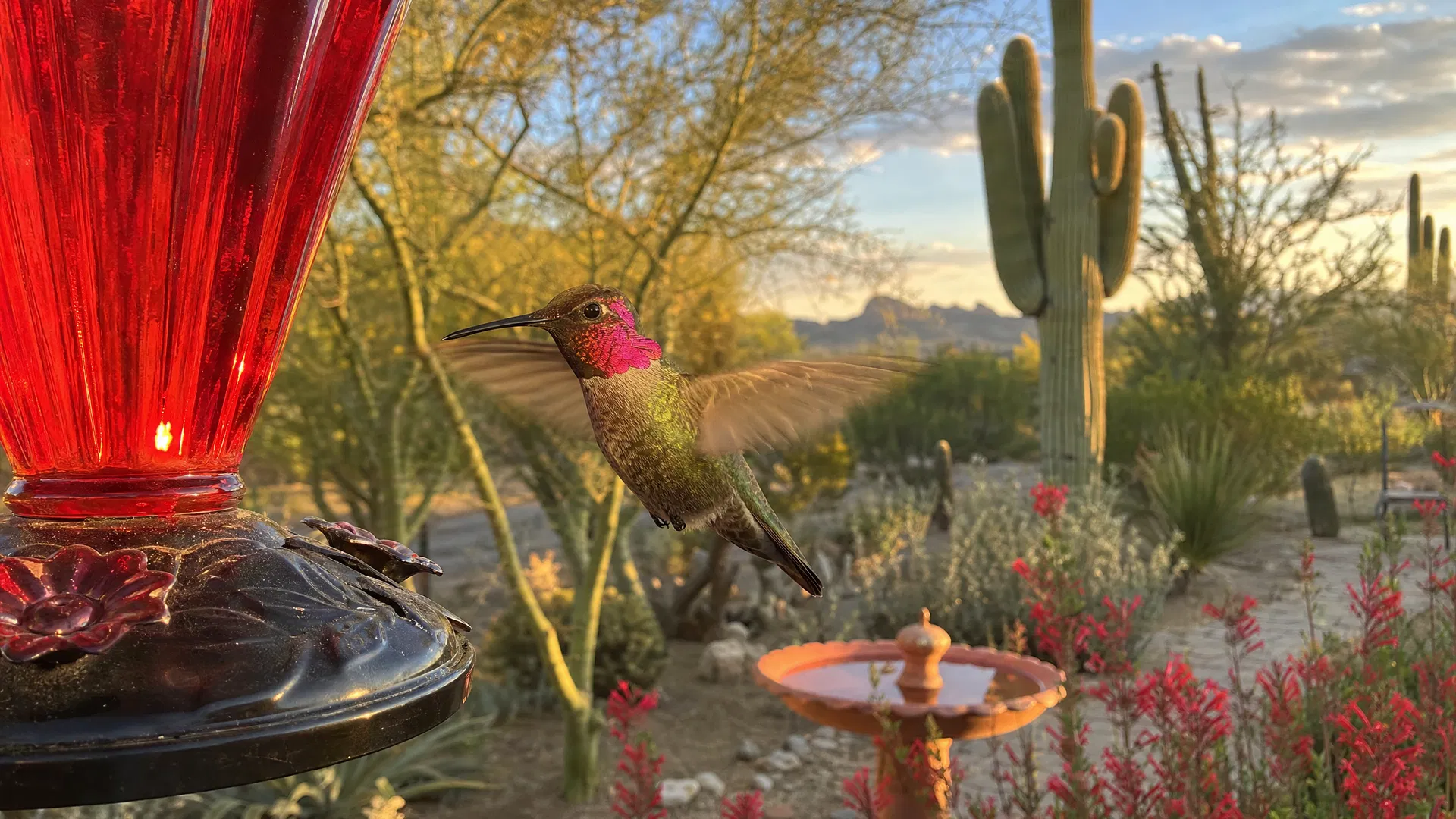
The desert Southwest hosts some of the most unique and sought-after bird species in North America. Hummingbird diversity here is extraordinary — up to 15 species have been recorded in southeastern Arizona alone. The key to attracting desert birds is providing water, which is far scarcer than food in arid environments.
Top Birds to Attract in the Southwest
| Bird | Best Attraction | Feeder/Habitat | Season |
|---|---|---|---|
| Anna’s Hummingbird | Nectar & native flowers | Hummingbird feeder | Year-round |
| Cactus Wren | Mealworms & berries | Platform feeder + water | Year-round |
| Pyrrhuloxia | Sunflower & safflower seeds | Platform feeder | Year-round |
| Curve-billed Thrasher | Mealworms & water | Ground feeder + birdbath | Year-round |
| Broad-billed Hummingbird | Nectar | Hummingbird feeder | Spring–Fall |
In the Southwest, a clean birdbath with a dripper or mister is often more effective than any feeder. The sound of moving water draws birds from remarkable distances in arid conditions. Plant native desert plants like salvia, penstemon, and desert willow to attract hummingbirds without relying solely on feeders.
Pacific Northwest (Washington, Oregon, Northern California)
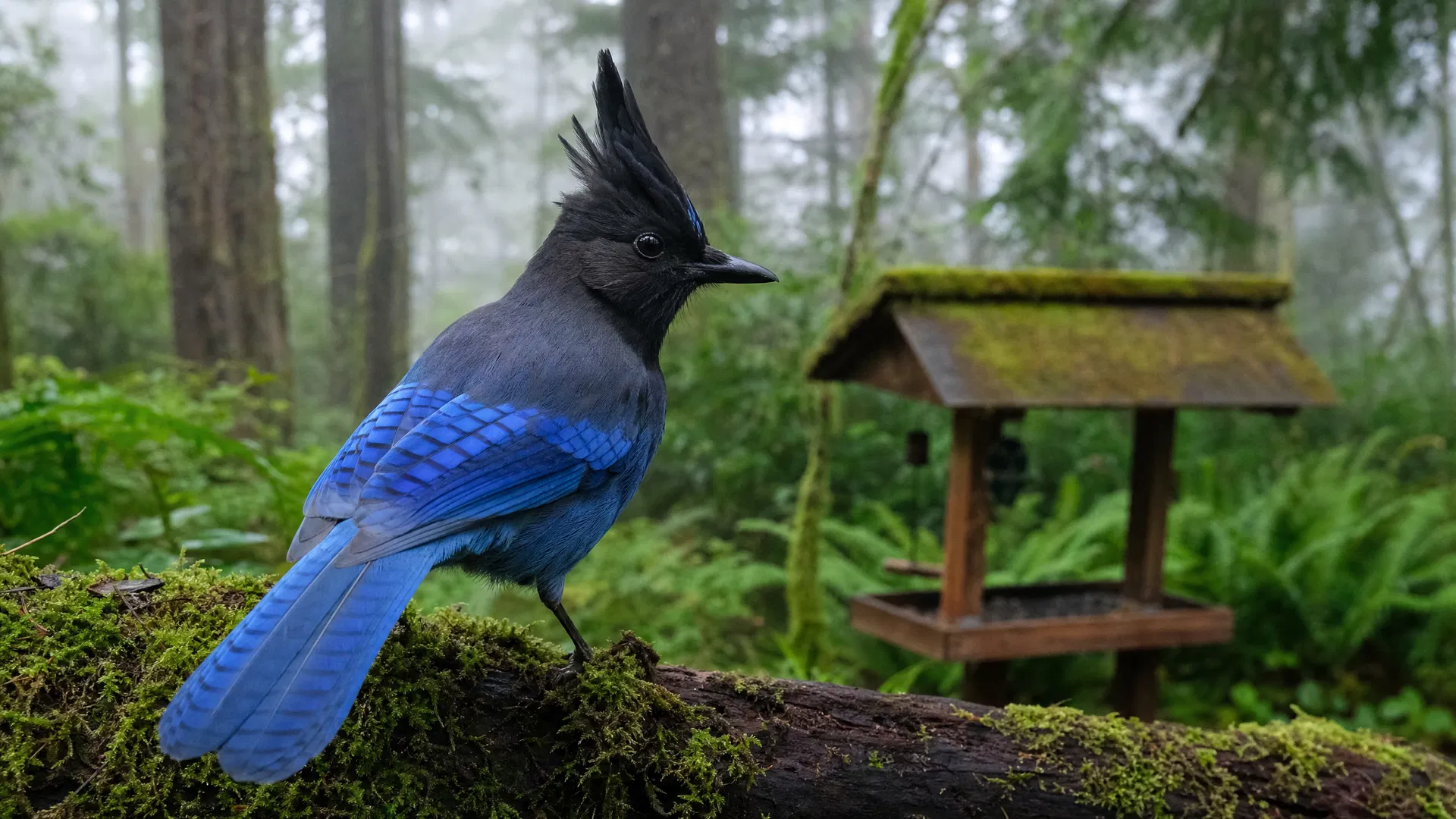
The Pacific Northwest’s temperate rainforests, coastal estuaries, and mountain meadows support a distinctive bird community quite different from the rest of North America. Mild, wet winters mean many birds stay year-round, and the region’s lush native plant communities provide abundant natural food sources that supplement feeder offerings.
Top Birds to Attract in the Pacific Northwest
| Bird | Best Food | Feeder Type | Season |
|---|---|---|---|
| Steller’s Jay | Peanuts & sunflower seeds | Platform feeder | Year-round |
| Chestnut-backed Chickadee | Black oil sunflower seeds | Tube feeder | Year-round |
| Anna’s Hummingbird | Nectar | Hummingbird feeder | Year-round |
| Varied Thrush | Berries & suet | Platform feeder | Fall–Winter |
| Rufous Hummingbird | Nectar | Hummingbird feeder | Spring–Summer |
The Pacific Northwest is one of the few places in North America where Anna’s Hummingbirds are year-round residents — keep your feeder up through winter and you’ll be rewarded. Plant native red-flowering currant, salal, and Oregon grape to provide natural food sources. The Varied Thrush — a striking orange-and-gray bird — visits lowland gardens in fall and winter and is best attracted with a platform feeder stocked with berries and suet.
Universal Tips for Any Region
Regardless of where you live, several principles apply universally to creating a bird-friendly backyard. Water is often more important than food — a clean birdbath with fresh water, especially one with a dripper or bubbler to create movement, will attract birds that never visit feeders. Native plants are far more valuable than ornamentals because they support the insects that make up the majority of most birds’ diets, especially during nesting season.
Window collisions are the leading human-caused source of bird mortality, killing an estimated 600 million birds annually in the United States. Placing feeders either very close to windows (within 3 feet) or far away (more than 30 feet) dramatically reduces collision risk.
Celebrate Your Birds Every Morning
There’s something deeply satisfying about starting your morning with a cup of coffee and watching the birds you’ve worked to attract come and go from your yard. Whether it’s a flash of cardinal red against winter snow, the acrobatic hover of a hummingbird at a summer feeder, or the cheerful chatter of chickadees on a cold morning, backyard birds bring daily joy that never gets old.
Your Bird Buddy Shop
Celebrate Your Favorite Backyard Birds
From chickadee mugs to hummingbird designs, our bird lover gift collection is perfect for the birder in your life — or as a treat for yourself.
Related Posts
Enjoyed this post? Browse our Etsy shop!
Bird shirts, mugs & faith apparel · 122+ designs · ★★★★★ 5.0


0 Comments